




En el mercado global de atracciones mecánicas, los barcos pirata no son productos poco comunes.
Sin embargo, una configuración aparece con mucha más frecuencia que otras:
el Barco Pirata de 24 Asientos.
Esto no es una coincidencia en la fabricación, sino el resultado de una selección operativa a largo plazo en diferentes tipos de parques.
A diferencia de los modelos más pequeños de 12 asientos, diseñados para espacios compactos, o las versiones más grandes de 36 asientos que requieren un mayor flujo de visitantes, la configuración de 24 asientos se sitúa en una “zona equilibrada”.”
Se utiliza ampliamente en:
- Parques de atracciones de tamaño mediano
- Parques turísticos costeros
- Plazas de entretenimiento comercial
- Parques temáticos familiares
- Operaciones de carnaval itinerantes
En decisiones reales de adquisición, este modelo suele considerarse la “opción predeterminada” cuando los compradores no están seguros de qué nivel de capacidad elegir.
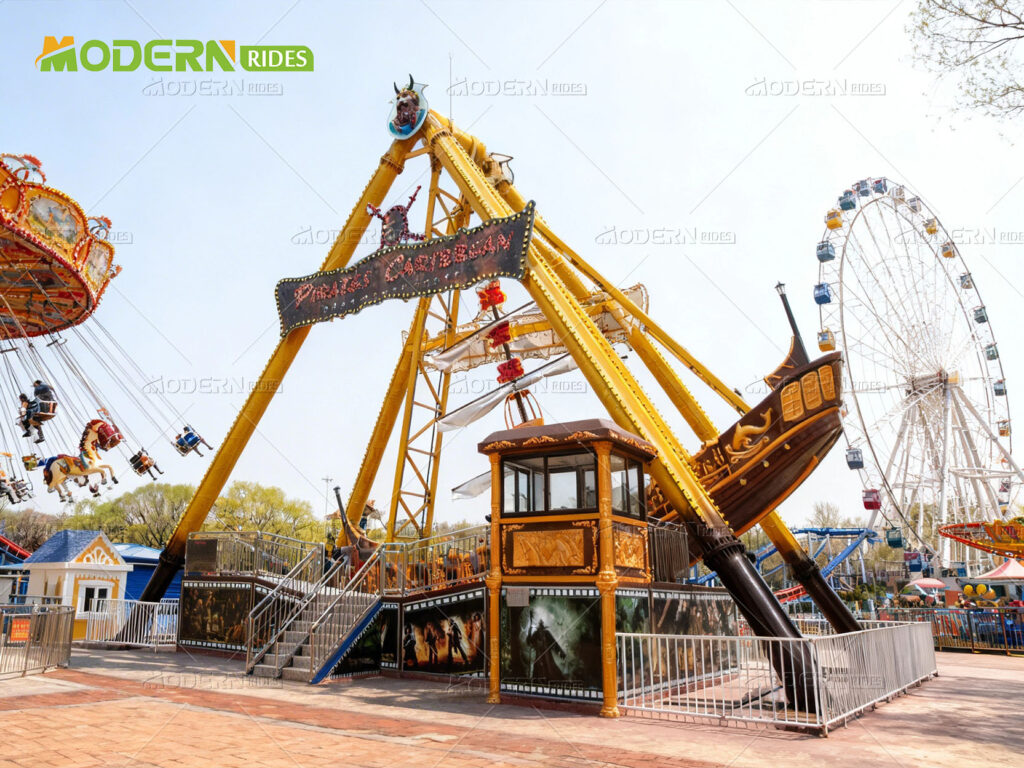
Precio del Barco Pirata de 24 Asientos y Costos Operativos Explicados
Por Qué el Precio No es un Número Fijo en Proyectos Reales
El precio de un Barco Pirata de 24 Asientos no se determina únicamente por el número de asientos.
En la práctica real de fabricación, el precio depende de:
- El grosor del acero estructural
- El material del casco (FRP o chapa de acero)
- La configuración del sistema de transmisión
- Sistema de control eléctrico
- El nivel de personalización decorativa
Rango de precios típico del mercado:
| Tipo de Configuración | Rango de Precio (USD) |
|---|---|
| Modelo Básico de Acero | $10,000 – $18,000 |
| Modelo Estándar de FRP | $15,000 – $25,000 |
| Modelo de Exportación de Alta Configuración | $20,000 – $35,000 |
Realidad de los Costos Operativos (Lo que los Compradores Suelen Pasar por Alto)
El precio de compra es solo la primera capa de costos.
Los gastos operativos reales incluyen:
- Consumo de electricidad
- Mantenimiento rutinario
- Lubricación y reemplazo de piezas
- Personal operador
- Inspección periódica de seguridad
Perfil mensual estimado de operación:
| Elemento | Rango Típico |
|---|---|
| Electricidad | De baja a moderada |
| Mantenimiento | Bajo |
| Requisito de personal | 1 operador |
| Riesgo de tiempo de inactividad | Bajo si se mantiene adecuadamente |
En comparación con atracciones de alta adrenalina, este modelo se considera equipo de baja carga operativa.
¿Cuántos Visitantes Puede Atender por Hora un Barco Pirata de 24 Asientos?
La Capacidad No es Solo el Número de Asientos
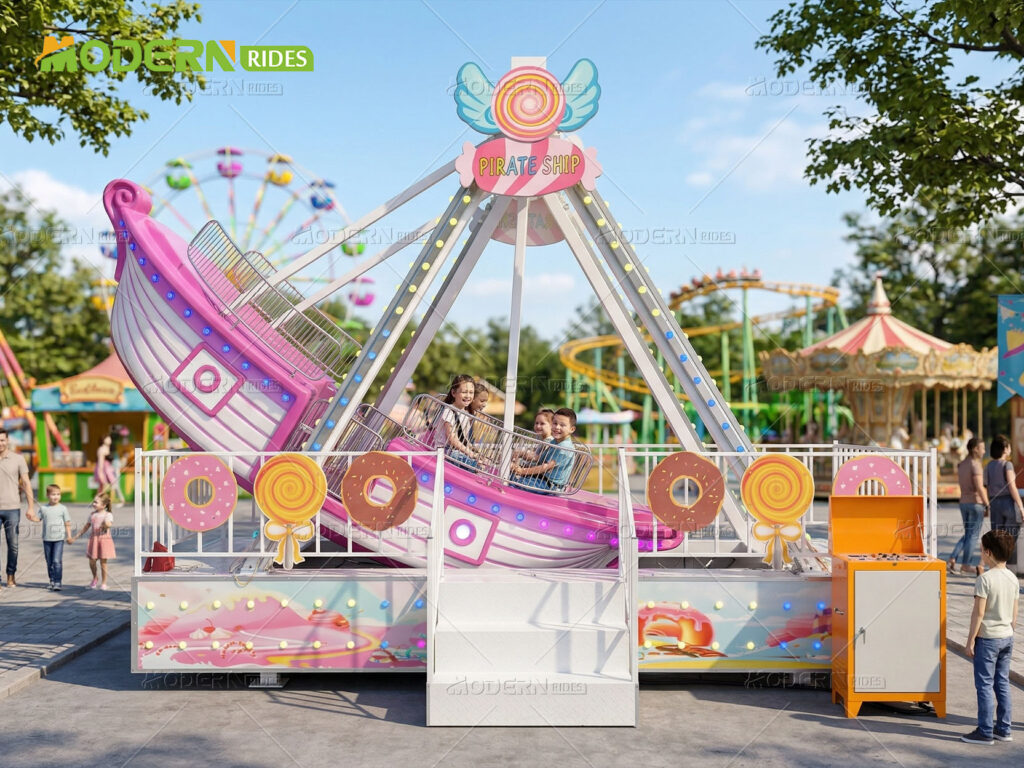
Muchos compradores asumen:
24 asientos = 24 pasajeros por ciclo × altos ingresos
Pero la capacidad real depende del tiempo de ciclo y la ocupación.
Ciclo operativo estándar:
- Duración del viaje: 2–3 minutos
- Carga/descarga: 1–2 minutos
- Ciclo total: ~4–5 minutos
Rendimiento Horario Realista
| Condición | Capacidad Estimada |
|---|---|
| Operación normal | 240–300 pasajeros/hora |
| Operación en hora punta | 300–400 pasajeros/hora |
| Operación de baja eficiencia | 180–220 pasajeros/hora |
Por qué este modelo funciona mejor que las atracciones más pequeñas en parques concurridos
En comparación con las versiones de 12 asientos:
- Menos ciclos de espera por grupo de visitantes
- Mayor estabilidad en el rendimiento
- Mejor absorción de colas durante los fines de semana
En comparación con las versiones de 36 asientos:
- Ciclos de carga completa más rápidos
- Menor dependencia de un gran flujo de visitantes
- Utilización diaria más estable
Por eso se convierte en la “opción de capacidad segura” para muchos operadores.
¿Qué hace que una atracción de barco pirata de 24 asientos sea una inversión inteligente para parques en crecimiento?
La ventaja de la capacidad media
La razón clave por la que este modelo domina los parques de nivel medio es simple:
Se adapta a entornos de crecimiento incierto.
Cuando un parque está creciendo, los operadores generalmente no saben:
- Si el flujo de visitantes se duplicará en 2 años
- Si el parque se expandirá
- Si la ubicación se volverá estacional o estable
El modelo de 24 asientos reduce este riesgo.
Lógica de inversión detrás de la atracción de barco pirata de 24 asientos
En lugar de maximizar la capacidad, optimiza:
- La tasa de utilización
- La estabilidad operativa
- La previsibilidad del mantenimiento
- La consistencia de los ingresos
Comparación en el mundo real:
| Modelo | Nivel de riesgo | Flexibilidad |
|---|---|---|
| 12 asientos | Riesgo bajo, escala limitada | Alta flexibilidad |
| 24 asientos | Riesgo equilibrado | Mejor adaptabilidad |
| 36 asientos | Alta dependencia del flujo de visitantes | Menor flexibilidad |
Por qué los operadores lo prefieren en fases de expansión
Cuando los parques pasan de la “etapa inicial” a la “etapa de crecimiento”, generalmente enfrentan:
- Aumento del volumen de visitantes
- Necesidad de atracciones visuales más impactantes
- Demanda de un mejor equilibrio en la capacidad de las atracciones
El modelo de 24 asientos se adapta naturalmente a esta fase de transición.
Requisitos de instalación de la atracción de barco pirata de 24 asientos: lo que los compradores deben saber
Un malentendido común es que las atracciones de parques son “enchufar y usar”.”
En realidad, la instalación requiere planificación en tres sistemas:
- Cimentación estructural
- Sistema eléctrico
- Disposición de las zonas de seguridad
Requisitos de espacio para una atracción de barco pirata de 24 asientos
Huella estándar:
- Área del equipo: aproximadamente 4 m × 7 m
- Zona de seguridad: se recomienda 8 m × 10 m
Esto es significativamente más grande que la huella física de la máquina.
Requisitos de cimentación
Una instalación adecuada requiere:
- Base de hormigón armado
- Control de tolerancia del terreno nivelado
- Sistema de fijación de pernos de anclaje
Un diseño deficiente de la cimentación es una de las causas más comunes de problemas de vibración a largo plazo.
Requisitos eléctricos
| Elemento | Especificación |
|---|---|
| Voltaje | 380V industrial |
| Alimentación eléctrica | Sistema de carga media |
| Control | Sistema basado en PLC |
La disposición eléctrica debe planificarse antes de que comience la construcción civil.
Tiempo de instalación
| Tipo de proyecto | Tiempo de instalación |
|---|---|
| Configuración doméstica simple | De 3 a 5 días |
| Instalación estándar de exportación | De 7 a 12 días |
| Instalación temática personalizada | De 10 a 15 días |
Posición de fabricación MODERNA para el juego de barco pirata de 24 asientos
En proyectos de exportación global, MODERNO se enfoca en proporcionar sistemas de juegos mecánicos estandarizados con una estructura de ingeniería consistente.
Para el Barco Pirata de 24 Asientos, el énfasis de producción incluye:
- Calidad de soldadura del marco de acero equilibrado
- Tratamiento de durabilidad del casco de FRP
- Sistemas de control de seguridad eléctrica
- Empaque modular listo para exportación
- Documentación de guía de instalación
El objetivo no es solo fabricar equipos, sino garantizar un funcionamiento estable en diferentes condiciones climáticas a nivel mundial.
Conclusión: Por qué el juego de barco pirata de 24 asientos se convirtió en el estándar de la industria
La popularidad del Barco Pirata de 24 Asientos no está impulsada por tendencias de marketing.
Es el resultado de un equilibrio operativo a largo plazo en miles de proyectos de parques.
Ocupa una posición única donde:
- Es lo suficientemente grande para atender un flujo medio de visitantes
- Es lo suficientemente pequeño para evitar el riesgo de sobrecapacidad
- Es lo suficientemente estable para una operación a largo plazo
- Es lo suficientemente flexible para múltiples tipos de parques
En la toma de decisiones práctica de la industria del entretenimiento, este equilibrio suele ser más valioso que las especificaciones extremas.