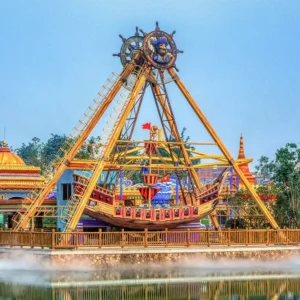





Sur le marché mondial des manèges à sensations, les bateaux pirates ne sont pas des produits rares.
Mais une configuration apparaît bien plus fréquemment que les autres :
Cela n’est pas un hasard de fabrication — c’est le résultat d’une sélection opérationnelle à long terme dans différents types de parcs.
Contrairement aux modèles plus petits de 12 places, conçus pour les sites compacts, ou aux versions plus grandes de 36 places nécessitant un flux de visiteurs plus important, la configuration à 24 places se situe dans une “ zone d’équilibre ”.”
Elle est largement utilisée dans :
- Les parcs d’attractions de taille moyenne
- Les parcs touristiques côtiers
- Les places de divertissement commerciales
- Les parcs à thème familiaux
- Les opérations de carnaval itinérantes
Dans les décisions d’achat réelles, ce modèle est souvent considéré comme l“” option par défaut » lorsque les acheteurs ne savent pas quelle capacité choisir.
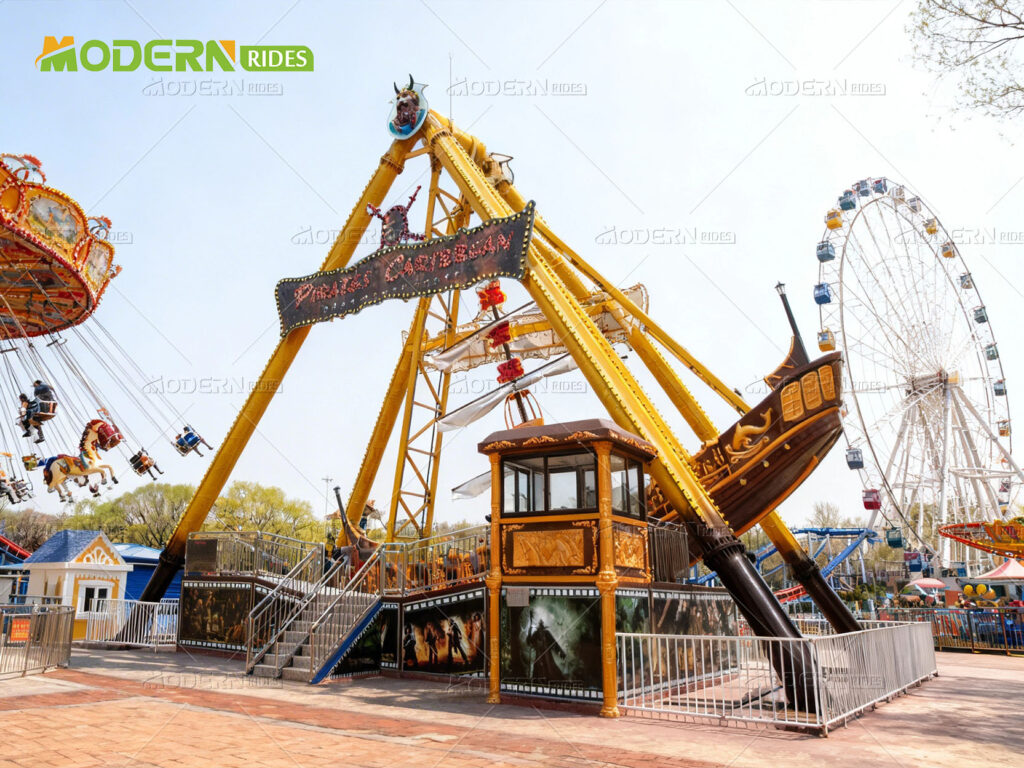
Prix du Bateau Pirate à 24 Places et Explication des Coûts d’Exploitation
Pourquoi le Prix n’est pas un Chiffre Fixe dans les Projets Réels
Le prix d’un Bateau Pirate à 24 Places n’est pas déterminé uniquement par le nombre de places.
Dans la pratique de fabrication réelle, le prix dépend de :
- L’épaisseur de l’acier structurel
- Le matériau de la coque (PRF ou tôle d’acier)
- La configuration du système d’entraînement
- Système de contrôle électrique
- Le niveau de personnalisation décorative
Fourchette de prix typique sur le marché :
| Type de Configuration | Fourchette de Prix (USD) |
|---|---|
| Modèle en acier de base | $10 000 – $18 000 |
| Modèle standard en PRF | $15 000 – $25 000 |
| Modèle d’exportation haut de gamme | $20 000 – $35 000 |
Réalité des Coûts d’Exploitation (Ce que les Acheteurs Négligent Souvent)
Le prix d’achat n’est que la première couche de coûts.
Les dépenses d’exploitation réelles incluent :
- La consommation d’électricité
- L’entretien courant
- La lubrification et le remplacement des pièces
- Le personnel d’exploitation
- L’inspection de sécurité périodique
Estimation du profil d’exploitation mensuel :
| Élément | Fourchette Typique |
|---|---|
| Électricité | Faible à modérée |
| Entretien | Faible |
| Besoin en main-d’œuvre | 1 opérateur |
| Risque de temps d’arrêt | Faible si bien entretenu |
Comparé aux manèges à sensations fortes, ce modèle est considéré comme un équipement à faible charge opérationnelle.
Combien de Visiteurs un Bateau Pirate à 24 Places Peut-il Accueillir par Heure ?
La Capacité n’est Pas Seulement le Nombre de Places
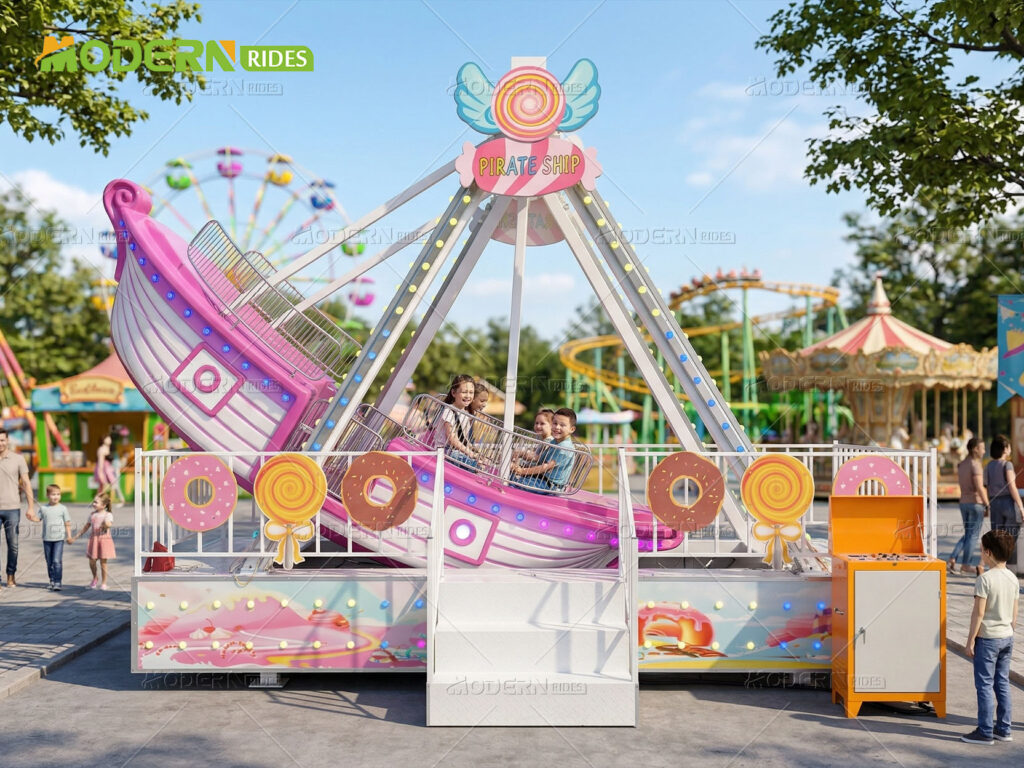
De nombreux acheteurs supposent :
24 places = 24 passagers par cycle × revenus élevés
Mais la capacité réelle dépend du temps de cycle et du taux d’occupation.
Cycle d’exploitation standard :
- Durée du manège : 2–3 minutes
- Chargement/déchargement : 1–2 minutes
- Cycle total : ~4–5 minutes
Débit Horaire Réaliste
| Condition | Capacité Estimée |
|---|---|
| Fonctionnement normal | 240–300 passagers/heure |
| Fonctionnement en pointe | 300–400 passagers/heure |
| Fonctionnement à faible rendement | 180–220 passagers/heure |
Pourquoi ce modèle est plus performant que les petites attractions dans les parcs très fréquentés
Par rapport aux versions à 12 places :
- Moins de cycles d’attente par groupe de visiteurs
- Stabilité de débit plus élevée
- Meilleure absorption des files d’attente pendant les week-ends
Par rapport aux versions à 36 places :
- Cycles à pleine charge plus rapides
- Moins de dépendance vis-à-vis d’un flux important de visiteurs
- Utilisation quotidienne plus stable
C’est pourquoi il devient le “ choix de capacité sécurisé ” pour de nombreux exploitants.
Qu’est-ce qui fait d’un bateau pirate de 24 places un investissement judicieux pour les parcs en croissance ?
L’avantage de la capacité moyenne
La raison principale pour laquelle ce modèle domine les parcs de niveau intermédiaire est simple :
Il s’adapte aux environnements de croissance incertains.
Lorsqu’un parc est en croissance, les exploitants ne savent généralement pas :
- Si le flux de visiteurs doublera en 2 ans
- Si le parc s’agrandira
- Si l’emplacement deviendra saisonnier ou stable
Le modèle à 24 places réduit ce risque.
Logique d’investissement derrière le bateau pirate de 24 places
Au lieu de maximiser la capacité, il optimise :
- Le taux d’utilisation
- La stabilité opérationnelle
- La prévisibilité de la maintenance
- La constance des revenus
Comparaison réelle :
| Modèle | Niveau de risque | Flexibilité |
|---|---|---|
| 12 places | Risque faible, échelle limitée | Haute flexibilité |
| 24 places | Risque équilibré | Meilleure adaptabilité |
| 36 places | Forte dépendance au flux de visiteurs | Flexibilité plus faible |
Pourquoi les exploitants le préfèrent en phase d’expansion
Lorsque les parcs passent du “ démarrage ” à la “ phase de croissance ”, ils sont généralement confrontés à :
- Une augmentation du volume de visiteurs
- Un besoin d’attractions visuelles plus fortes
- Une demande d’équilibre de capacité des attractions
Le modèle à 24 places s’intègre naturellement à cette phase de transition.
Exigences d’installation d’un bateau pirate de 24 places : ce que les acheteurs doivent savoir
Une idée fausse courante est que les attractions sont “ prêtes à l’emploi ”.”
En réalité, l’installation nécessite une planification sur trois systèmes :
- Fondation structurelle
- Système électrique
- Disposition des zones de sécurité
Exigences d’espace pour un bateau pirate de 24 places
Emprise au sol standard :
- Zone d’équipement : environ 4 m × 7 m
- Zone de dégagement de sécurité : 8 m × 10 m recommandé
Cela est nettement plus grand que l’empreinte physique de la machine.
Exigences de fondation
Une installation correcte nécessite :
- Une base en béton armé
- Contrôle de la tolérance du sol de niveau
- Système de fixation par boulons d'ancrage
Une conception de fondation inadéquate est l'une des causes les plus courantes de problèmes de vibrations à long terme.
Exigences électriques
| Élément | Spécifications |
|---|---|
| Tension | 380V industriel |
| Alimentation électrique | Système à charge moyenne |
| Contrôle | Système basé sur automate programmable (PLC) |
Le plan électrique doit être conçu avant le début des travaux de génie civil.
Durée d'installation
| Type de projet | Durée d'installation |
|---|---|
| Installation domestique simple | 3 à 5 jours |
| Installation standard pour l'exportation | 7 à 12 jours |
| Installation thématique personnalisée | 10 à 15 jours |
Position de fabrication MODERNE pour le manège de bateau pirate de 24 places
Dans les projets d'exportation mondiaux, MODERN l'accent est mis sur la fourniture de systèmes de manèges standardisés avec une structure technique cohérente.
Pour le Bateau Pirate à 24 Places, l'accent de production inclut :
- Qualité de soudure équilibrée du châssis en acier
- Traitement de durabilité de la coque en PRF (plastique renforcé de fibres)
- Systèmes de contrôle de sécurité électrique
- Emballage modulaire prêt pour l'exportation
- Documentation d'orientation pour l'installation
L'objectif n'est pas seulement de fabriquer des équipements, mais d'assurer un fonctionnement stable dans différentes conditions climatiques à travers le monde.
Conclusion : Pourquoi le manège de bateau pirate de 24 places est devenu la référence de l'industrie
La popularité du Bateau Pirate à 24 Places n'est pas dictée par les tendances marketing.
Elle résulte d'un équilibre opérationnel à long terme dans des milliers de projets de parcs.
Il occupe une position unique où :
- Il est suffisamment grand pour gérer un flux de visiteurs moyen
- Il est suffisamment petit pour éviter un risque de surcapacité
- Il est suffisamment stable pour un fonctionnement à long terme
- Il est suffisamment flexible pour s'adapter à plusieurs types de parcs
Dans la prise de décision pratique de l'industrie des manèges, cet équilibre est souvent plus précieux que des spécifications extrêmes.