


Modern amusement parks compete not only through the number of attractions they offer but through the intensity and variety of experiences visitors remember. Thrill rides play an important role because they combine dramatic movement, height, speed, acceleration and visual impact to create memorable experiences for teens and adults.
From giant pendulums and drop towers to rotating rides and roller coasters, different thrill attractions create very different sensations. For park operators, their value extends beyond adrenaline. A strong thrill attraction can become a visual landmark, attract visitors toward a specific zone and strengthen the overall identity of the park.
MODERN offers multiple thrill-ride categories, including pendulum rides, drop towers, Kamikaze rides, Booster rides, Sky Flyers and roller coasters for commercial amusement projects.
What Are Thrill Rides and What Makes Them Exciting
Thrill rides are amusement attractions designed to create intense physical and emotional experiences through speed, height, rotation, swinging, drops and rapid changes in movement.
Unlike attractions focused mainly on gentle sightseeing or low-intensity participation, thrill rides deliberately create stronger sensations. Riders may experience rapid acceleration, elevated viewpoints, changes in direction or repeated rotation during a relatively short ride cycle.
The excitement usually comes from several elements working together. Height creates anticipation, speed increases intensity, swinging changes the rider’s position continuously, and sudden drops create strong vertical sensations.
This is why a giant pendulum and a drop tower can both be classified as thrill attractions while providing very different experiences.
How Thrill Rides Deliver Different Levels of Excitement
Different levels of excitement are created by changing the combination and intensity of speed, height, rotation, acceleration and movement patterns.
The strongest attractions do not necessarily rely on every element at once.
- Speed makes movement feel more dynamic and intense.
- Height adds anticipation and a stronger sense of exposure.
- Rotation repeatedly changes rider orientation.
- Acceleration makes transitions between movements feel more dramatic.
- Movement pattern determines whether visitors experience swinging, spinning, dropping or looping.
This is why high thrill rides can create very different reactions. A pendulum gradually builds excitement through higher swings, while a drop tower relies on ascent and sudden descent. Kamikaze and Booster rides create another type of intensity through rotation around a central structure.
Park operators should therefore think about the type of excitement they want to offer rather than simply asking which attraction is the most extreme.
Popular Thrill Rides for Different Visitor Experiences
Different thrill rides create different visitor experiences, allowing amusement parks to build variety within the same high-intensity category.
Popular examples include:
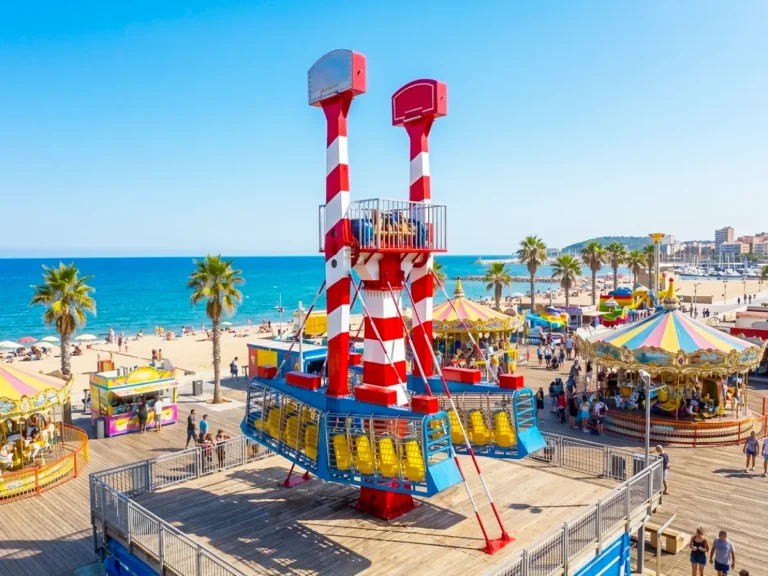
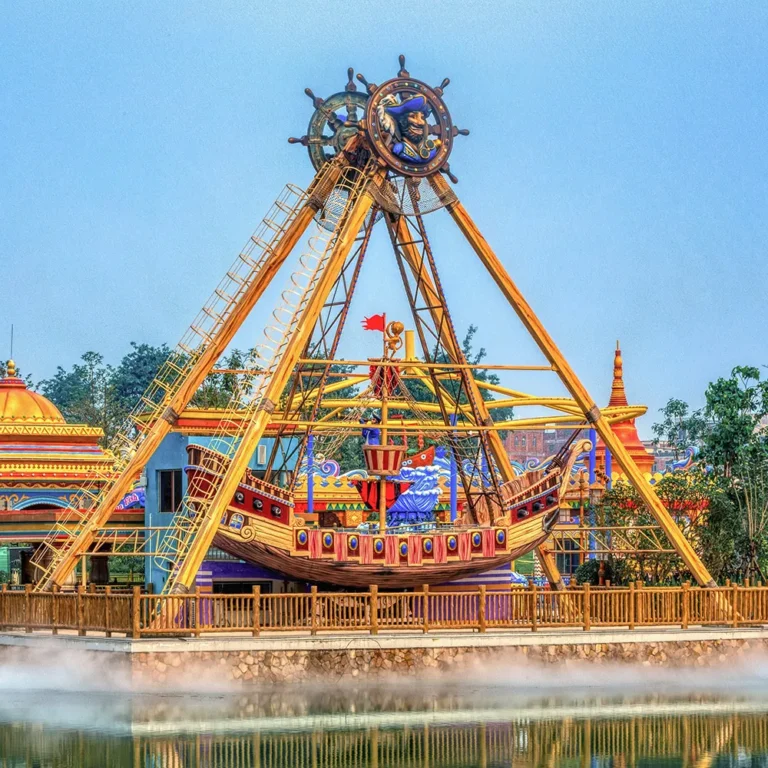
- Pendulum Rides: Combine large swinging arcs with rotation, creating changing height and orientation.
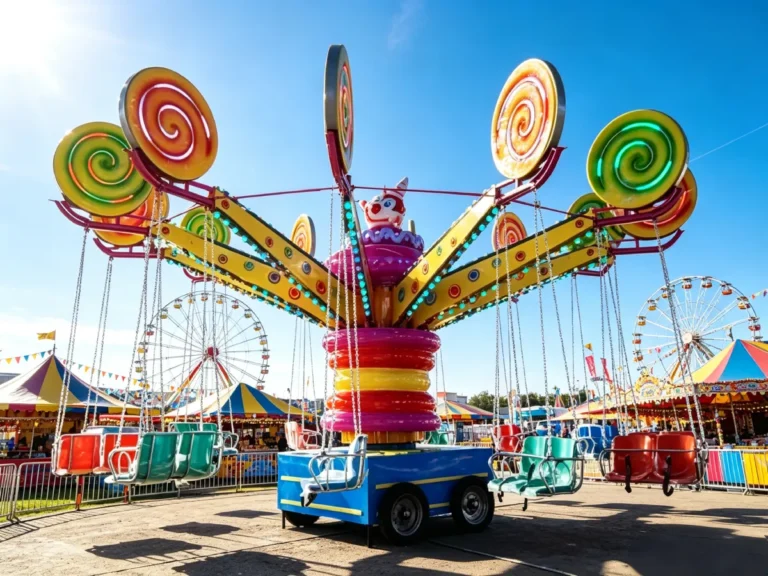
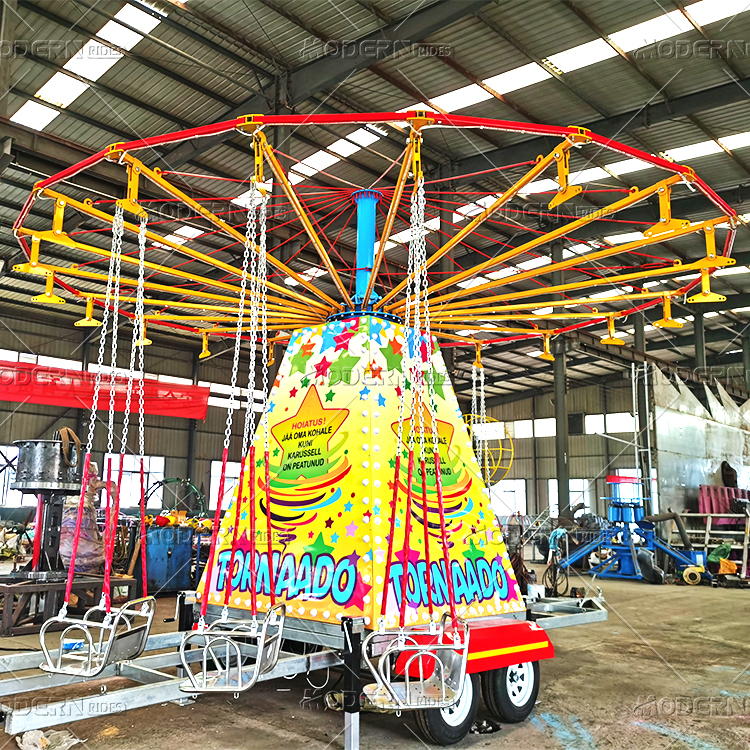
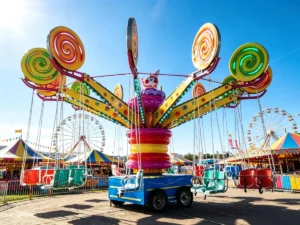
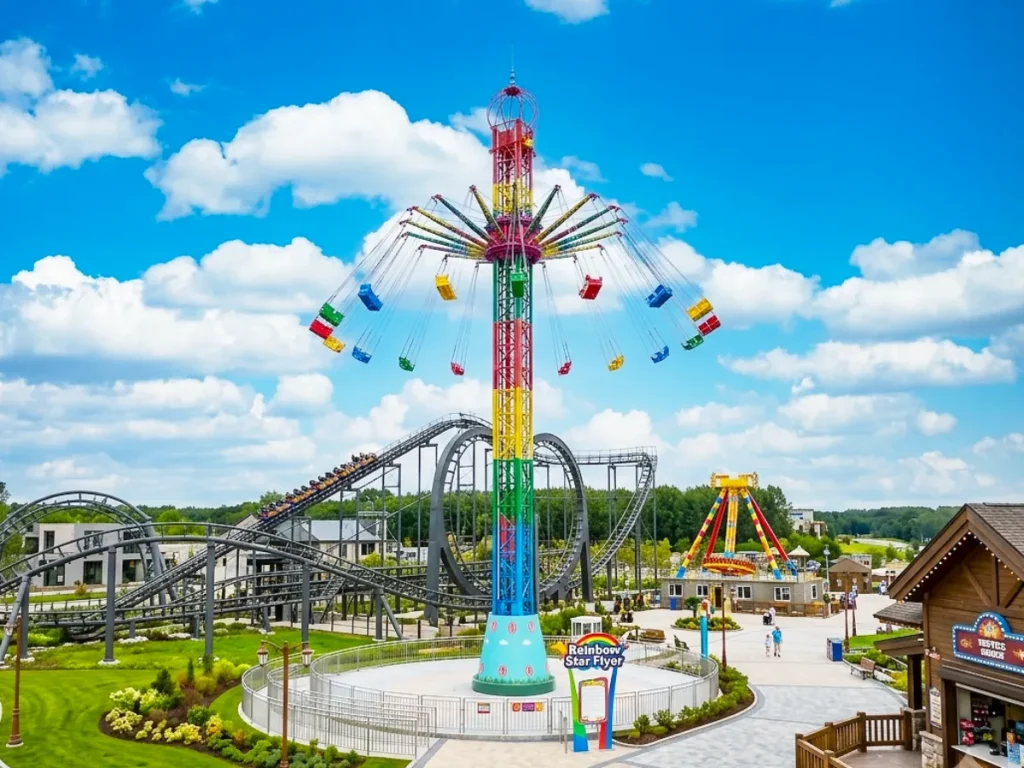
- Flying Chair Rides: Create an elevated swinging sensation as rotating seats move outward.
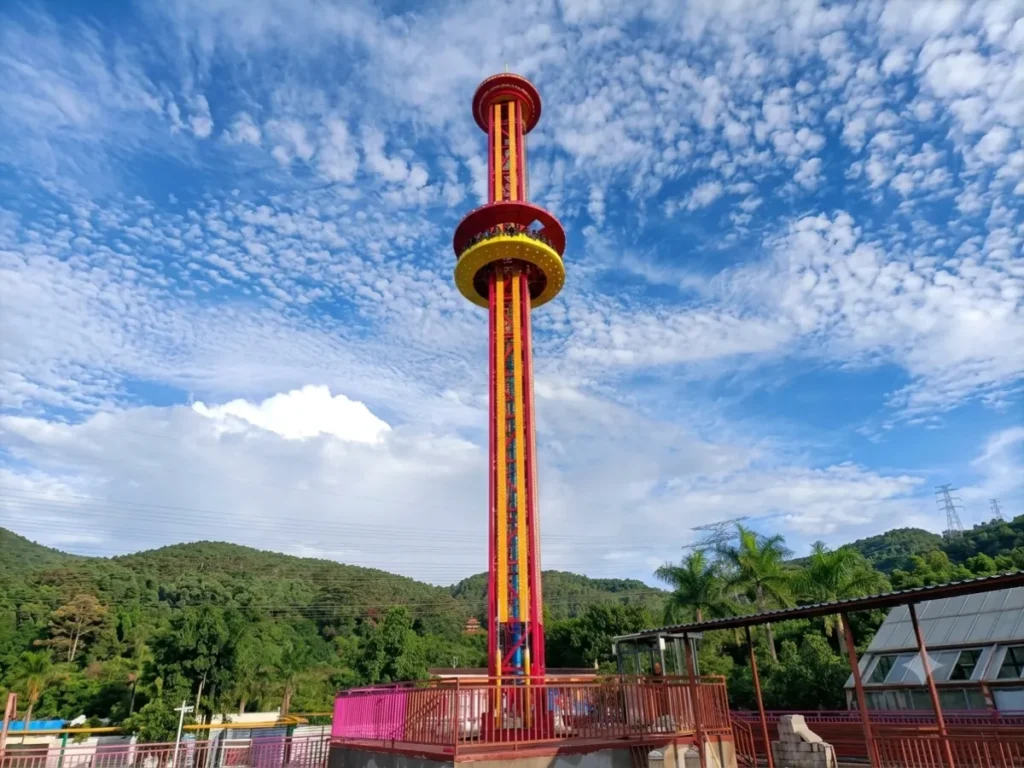
- Drop Towers: Build anticipation during ascent before delivering a rapid vertical descent.
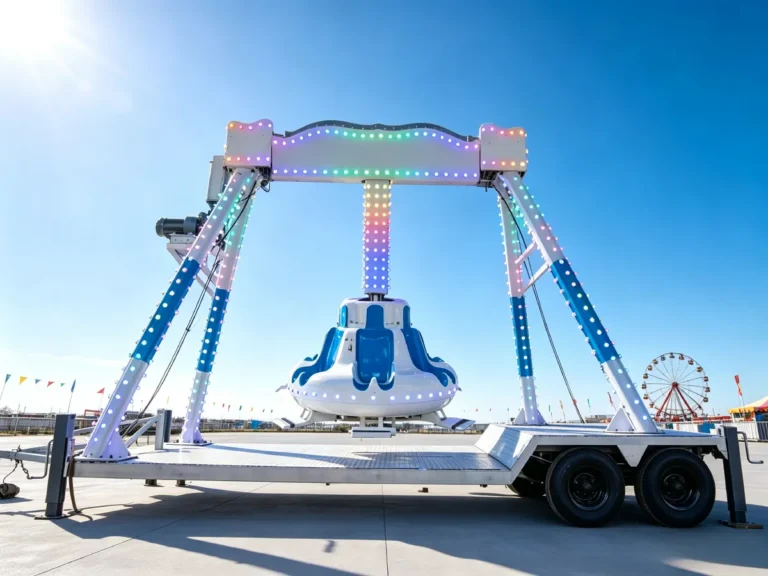
- Kamikaze Rides: Use rotating arms and repeated changes in rider position.
- Roller Coasters: Combine track layout, speed, elevation changes and directional transitions.
MODERN’s current product range includes attractions such as the 360° Giant Pendulum, Drop Tower, Booster and Star Flyer. Published specifications for the 360° Giant Pendulum include 23 seats, a 360° swing angle, 23 m device height and a 14 × 15 m cover area.
These differences help parks avoid creating a thrill zone where every attraction feels similar.
What Makes a Thrill Ride Attractive to Amusement Park Visitors
A successful thrill ride attracts visitors through visible movement, anticipation, excitement and an experience that remains memorable before, during and after the ride.
Visual impact begins before visitors enter the queue. A giant swinging structure, elevated tower or moving coaster train can often be seen from other areas of the park, drawing attention toward the attraction.
Motion also becomes part of the entertainment for non-riders. Watching a pendulum swing or seeing a drop tower descend helps visitors understand the experience before deciding whether to participate.
Thrill attractions can strengthen visitor engagement by creating moments people want to photograph, discuss or experience again. For operators, this helps explain why extreme amusement rides can become important parts of a park’s identity rather than functioning as isolated equipment.
What to Consider When Buying Thrill Rides
Buyers evaluating thrill rides for sale should verify that the attraction’s technical and operational requirements match the actual amusement park project.
Important considerations include:
- Ride capacity: Determine whether throughput matches expected visitor traffic.
- Dimensions: Check equipment footprint together with queue and safety-clearance requirements.
- Speed and height: Evaluate how the operating envelope fits the site and target visitor experience.
- Power requirements: Confirm available voltage, frequency and electrical capacity.
- Installation: Consider foundation, transport access, lifting and assembly requirements.
- Maintenance: Ensure components can be inspected and serviced efficiently.
- Safety requirements: Confirm local approvals, inspections and operational requirements.
For thrill rides for sale, the strongest commercial choice is not always the largest attraction. It is the one that visitors find exciting and the park can operate reliably over the long term.
Why MODERN Thrill Rides Are Built for Amusement Park Projects
MODERN provides different thrill rides designed for amusement parks, entertainment destinations and other commercial attraction projects.
Its current thrill category includes giant pendulums, drop towers, Kamikaze rides, Booster rides, Sky Flyers and roller coasters. These products vary significantly in height, capacity, footprint and movement style, giving project developers multiple options for creating different visitor experiences.
Beyond equipment supply, MODERN supports project planning, production, installation coordination and implementation. This broader project perspective matters because thrill rides need to work within real site conditions, visitor flow and operating requirements.
For park investors, selecting a thrill ride is therefore not only a product decision. It is also a planning decision involving space, infrastructure, target visitors and long-term operation.
Conclusion
Thrill rides are valuable because they create strong emotions, visual impact and memorable visitor experiences. Speed, height, rotation, drops and changing movement patterns allow different attractions to deliver different forms of excitement.
The most successful park does not simply install the most extreme equipment available. It builds a thrill portfolio that matches the target audience, site conditions and operating plan.
MODERN provides a broad range of thrill attractions and project support for different amusement park requirements. By combining suitable products with practical planning, park operators can create high-impact attractions that are exciting for visitors and sustainable for long-term operation.