Book Categories:

FAQ
1. Can one Portable Amusement Ride really support a full-time business?
Yes—but only if it is used frequently.
A single Portable Amusement Ride can generate stable income when it is:
- scheduled across multiple events
- placed in high-traffic locations
- operated consistently during peak seasons
If it stays in one location with limited demand, revenue will be unstable. The business model depends on movement and frequency, not just ownership of the equipment.
2. How complicated is the setup process for Portable Amusement Ride?
Setup complexity varies by model, but most Portable Amusement Ride designs focus on reducing assembly time.
In practice:
- smaller units can be installed within a few hours
- larger portable rides may require one full working day
The key factor is whether the structure is designed for repeated assembly. Poor design leads to longer setup times and higher labor costs over time.
3. What permits or approvals are usually required?
Requirements depend on local regulations, but most Portable Amusement Ride operations involve:
- temporary event permits
- safety inspection approvals
- local authority coordination
Experienced operators usually work closely with event organizers, who often assist in handling part of the approval process.
4. Is frequent transport likely to damage the equipment?
Not if the Portable Amusement Ride is properly designed.
Well-built units consider:
- structural reinforcement for repeated movement
- secure locking systems during transport
- simplified disassembly to reduce stress points
Damage typically occurs when equipment is not designed for mobility or when improper handling is used.
5. What kind of locations generate the highest return?
The most profitable locations for a Portable Amusement Ride are not permanent sites, but temporary high-density events, such as:
- festivals and holidays
- commercial promotions
- seasonal fairs
These events concentrate large numbers of visitors in a short time, allowing operators to maximize revenue within limited operating days.
6. How do experienced operators reduce downtime between locations?
Efficiency between events is critical.
Experienced Portable Amusement Ride operators:
- plan logistics in advance
- minimize disassembly complexity
- schedule back-to-back events
Reducing idle time is often more important than increasing ticket price when it comes to improving overall profitability.
1. Is Portable Amusement Ride a short-term business—or a scalable long-term model?
A Portable Amusement Ride is often seen as a temporary solution, but in reality, it can evolve into a scalable business model.
Operators who succeed usually expand by:
- increasing the number of units
- covering multiple event locations
- building relationships with local organizers
Instead of relying on one fixed site, they create a network of revenue points. The key is not the equipment itself, but how efficiently it is deployed across different locations.
2. Why do some Portable Amusement Ride operators struggle to make profit?
The issue is rarely the equipment—it’s usually poor operational planning.
A Portable Amusement Ride requires:
- consistent event scheduling
- high-traffic location selection
- efficient transport and setup
Operators who treat it as a passive investment often face long idle periods, which directly reduce profitability. In contrast, those who actively manage movement and timing typically see much faster returns.
3. What determines the real payback speed of a Portable Amusement Ride?
The return on a Portable Amusement Ride depends more on usage frequency than on ticket price.
Key factors include:
- how many events it operates per month
- how quickly it can be relocated
- how well peak seasons are utilized
A ride that operates frequently across multiple events can recover its investment significantly faster than one placed in a single low-traffic location.
4. Is transportation cost a major hidden expense in Portable Amusement Ride projects?
Transportation is often underestimated when planning a Portable Amusement Ride business.
Costs include:
- fuel and logistics
- loading and unloading labor
- potential downtime between locations
However, well-designed portable equipment reduces these costs through compact structure and faster assembly, making frequent movement more economically viable.
5. How do experienced operators choose the right Portable Amusement Ride model?
Experienced buyers do not choose a Portable Amusement Ride based only on appearance or price.
They focus on:
- transport efficiency (size and weight)
- setup time (labor and speed)
- stability after repeated relocation
A slightly simpler model that can be moved and installed quickly often generates more profit than a complex unit that slows down operation cycles.
1. Why is Carousel Ride often the last ride operators consider—but the first to stabilize revenue?
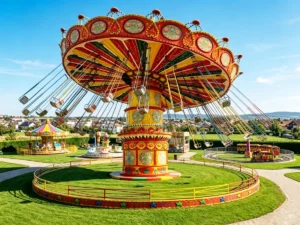
A Carousel Ride is rarely the most exciting attraction, so it’s often placed later in the investment plan. However, once the park begins operating, it quickly becomes one of the most consistent revenue sources.
The reason is simple: it serves a wider audience and runs almost continuously throughout the day. While high-thrill rides depend on peak demand, a Carousel Ride fills the gaps between those peaks, ensuring steady passenger flow and reducing idle time across the park.
2. What actually determines the right Carousel Ride size for a project?
Choosing the right Carousel Ride is not just about budget—it’s about matching capacity with real visitor flow.
Smaller models are suitable for limited spaces or low-traffic areas, while larger double-deck versions are typically used where:
- visitor volume is consistently high
- the ride also serves as a visual focal point
- queue demand can be maintained
Oversizing a Carousel Ride often leads to underutilization, which directly affects return on investment.
3. Is a luxury Carousel Ride really worth the extra investment?
A high-end Carousel Ride does more than provide rides—it enhances the overall perception of the park.
In commercial areas or tourism-focused projects, a visually strong carousel can:
- attract foot traffic from a distance
- increase photo-sharing and exposure
- improve the perceived value of the park
However, in smaller local parks, the return from visual upgrades may not justify the added cost. The decision should depend on whether the project relies on visual attraction or operational efficiency.
4. How does Carousel Ride contribute to overall park traffic flow?
A Carousel Ride plays a structural role in park layout rather than acting as a standalone attraction.
Because it has:
- short cycle times
- continuous boarding
- broad audience appeal
it helps maintain movement within the park, preventing congestion in high-demand areas and reducing downtime between major attractions.
In many successful parks, the Carousel Ride is placed strategically to connect different zones and smooth out visitor distribution.
5. What are the most common mistakes when investing in a Carousel Ride?
The most frequent issue is underestimating its operational role.
Common mistakes include:
- treating it as a decorative ride instead of a revenue unit
- placing it in low-traffic areas
- choosing size based only on budget rather than capacity planning
A well-positioned and properly sized Carousel Ride often performs far better than expected, while a poorly planned one may remain underused despite good design.

Reliable Heating Solutions
Our Global Office
Get In Touch With Us
Latest Blog Posts
-
Introduction When buyers search for Portable Amusement Ride Cost, the first thing they usually expect is a simple number. A price list, a quick range, or a “standard budget”. But in real amusement business practice, cost is rarely that simple. From MODERN’s project experience in global portable ride supply, the final investment is often not […]2026-04-15
-
Introduction When investors enter the amusement equipment industry, one of the most common early-stage decisions is choosing between a Portable Amusement Ride vs Fixed Rides setup. At first glance, the answer may seem simple. Fixed rides look more professional and stable, while portable rides appear more flexible and lower risk. However, in real-world operations, the […]2026-04-15
-
Introduction A Portable Amusement Ride for Events is often seen as a flexible, fast-return investment. But in real event operations, flexibility alone does not guarantee profit. Many first-time operators discover that even with a popular ride, actual income varies significantly from one event to another. The difference is not the equipment itself, but how it […]2026-04-15