Categorías de Libros:





Atracción Portátil vs. Atracciones Fijas: ¿Cuál es Mejor?
Introducción
Cuando los inversores ingresan a la industria de equipos de entretenimiento, una de las decisiones iniciales más comunes es elegir entre una Atracción Portátil vs Atracciones Fijas configuración.
A primera vista, la respuesta puede parecer simple. Las atracciones fijas lucen más profesionales y estables, mientras que las portátiles parecen más flexibles y de menor riesgo. Sin embargo, en operaciones reales, la decisión no se basa en la apariencia o el concepto. Se trata de cómo el negocio genera ingresos bajo diferentes condiciones operativas.
Desde la experiencia de MODERN Basado en la experiencia de proyectos en múltiples regiones, la diferencia de rendimiento entre sistemas portátiles y fijos no es absoluta. Depende en gran medida de la estabilidad del flujo de visitantes, el costo del terreno, el modelo operativo y la rapidez con la que el operador necesita recuperar la inversión.
Este artículo desglosa ambas opciones utilizando lógica industrial práctica, no suposiciones teóricas.
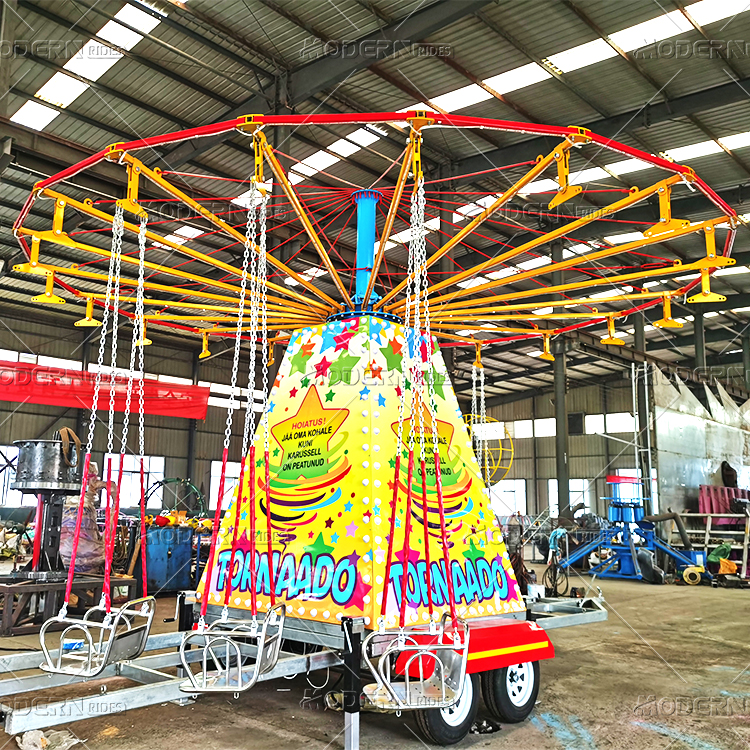
Atracción Portátil vs Atracciones Fijas: Diferencia Comercial Principal
Atracción Portátil vs Atracciones Fijas: Diferencia en el Modelo Operativo
A Atracción Portátil vs Atracciones Fijas La comparación comienza con una distinción clave: la movilidad.
Las atracciones portátiles están diseñadas para el movimiento y despliegue temporal. Las atracciones fijas están construidas para una ubicación permanente a largo plazo.
En la operación real:
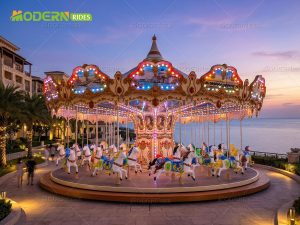
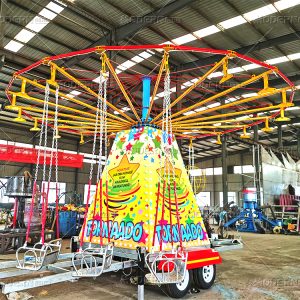
- Las atracciones portátiles se centran en el despliegue repetido en diferentes ubicaciones
- Las atracciones fijas se centran en un flujo estable de visitantes a largo plazo en un solo sitio
Esta diferencia afecta directamente la consistencia de los ingresos, la estructura de costos operativos y la exposición al riesgo.
Atracción Portátil vs Atracciones Fijas: Estructura de Inversión
Desde una perspectiva financiera, el modelo de inversión es fundamentalmente diferente.
Rangos típicos de la industria (referencia general del mercado):
- Atracciones portátiles: aproximadamente de 5,000 a 80,000 USD, según el tamaño y la configuración
- Atracciones fijas: a menudo de 50,000 USD a varios millones de USD, incluyendo obras civiles, instalación e infraestructura
La diferencia clave no es solo el costo del equipo, sino también:
- Requisitos de preparación del terreno
- Costos de ingeniería civil
- Compromiso a largo plazo con el sitio
Los sistemas portátiles reducen la dependencia de infraestructura inicial, mientras que los sistemas fijos concentran la inversión en una sola ubicación permanente.
Atracción Portátil vs Atracciones Fijas: Rendimiento de Ingresos
Atracción Portátil vs Atracciones Fijas: Estabilidad de Ingresos
En una Atracción Portátil vs Atracciones Fijas comparación, la estabilidad de los ingresos es una de las diferencias más importantes.
Las atracciones fijas generalmente se benefician de:
- Flujo constante de visitantes diarios
- Marca establecida del parque
- Patrones estacionales pero predecibles
Las atracciones portátiles dependen más de:
- Calendarios de eventos
- Festivales locales
- Concentración temporal de multitudes
Esto significa que las atracciones fijas son generalmente más estables, mientras que las portátiles son más variables pero flexibles.
Atracción Portátil vs Atracciones Fijas: Lógica Realista de Ingresos Diarios
En lugar de usar la capacidad máxima teórica, los operadores reales se centran en las horas operativas efectivas.
Para atracciones portátiles en entornos de eventos:
- Tiempo de ciclo típicamente de 2 a 4 minutos
- Eficiencia operativa realista de 4 a 6 horas efectivas por día
- Ocupación varía entre 50 y 80 por ciento según el tipo de multitud
Esto a menudo resulta en:
- 2,000 a 5,000 USD por día en condiciones de evento activo (rango de equipos de tamaño mediano)
Para atracciones fijas en parques establecidos:
- Los ingresos dependen de la estacionalidad y el volumen de visitantes
- Los parques estables pueden generar una rotación diaria consistente, pero con mayores gastos operativos
Nota importante: las atracciones fijas pueden superar significativamente a las portátiles en parques de atracciones de alto tráfico, pero rendir menos en ubicaciones de bajo tráfico.
Atracción Portátil vs Atracciones Fijas: Complejidad Operativa
Atracción Portátil vs Atracciones Fijas: Configuración y Movilidad
Una de las ventajas más fuertes de los sistemas portátiles es la flexibilidad de despliegue.
Atracciones portátiles:
- No requieren cimentación permanente en la mayoría de los casos
- Pueden transportarse en remolque o camión
- Pueden reubicarse entre eventos o ciudades
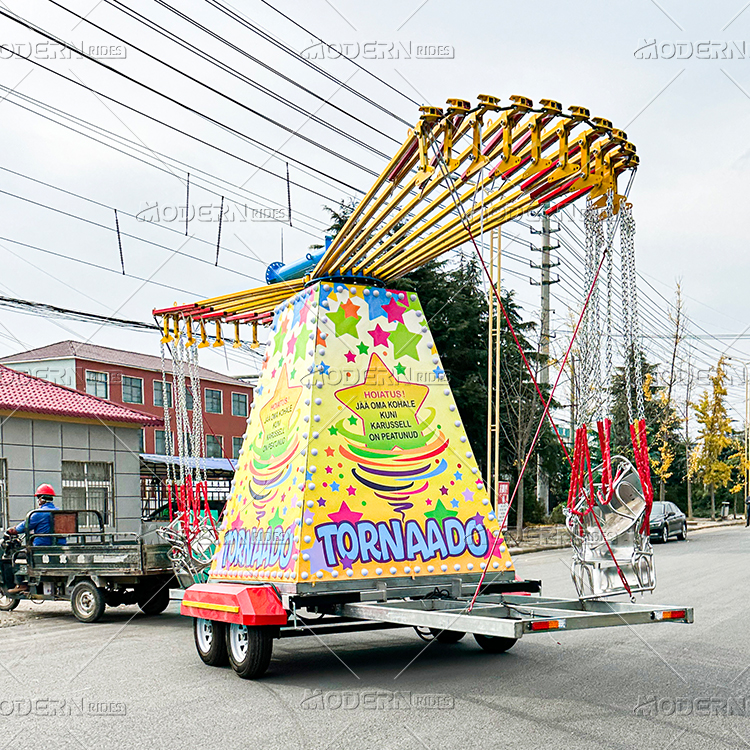
Atracciones fijas:
- Requieren trabajo de cimentación civil
- Ciclos largos de instalación y puesta en marcha
- Alto costo de reubicación si se trasladan
Según comentarios de proyectos reales, el tiempo de configuración impacta directamente el potencial de ingresos de las atracciones portátiles. Un proceso de instalación más lento reduce los días operativos utilizables por temporada.
Atracción Portátil vs Atracciones Fijas: Requisitos de Mantenimiento
Los patrones de mantenimiento también difieren significativamente.
Atracciones portátiles:
- Inspecciones relacionadas con el transporte más frecuentes
- Sistemas mecánicos más simples en muchos casos
- Enfoque en el bloqueo estructural y la estabilidad de la conexión
Atracciones fijas:
- Mayor complejidad estructural
- Sistemas más integrados
- Menor estrés de transporte pero mayor dependencia de infraestructura a largo plazo
En la práctica, las atracciones fijas requieren equipos de mantenimiento más especializados, mientras que las atracciones portátiles requieren mayor disciplina operativa durante la reubicación.
Atracción portátil vs Atracción fija: Riesgo y flexibilidad
Atracción portátil vs Atracción fija: Exposición al riesgo comercial
La estructura de riesgo es una de las diferencias más pasadas por alto.
Atracciones portátiles:
- Menor dependencia de la ubicación
- Capacidad para cambiar de mercado rápidamente
- Riesgo reducido por un único sitio deficiente
Atracciones fijas:
- Alta dependencia del rendimiento del parque
- Capital a largo plazo vinculado a una sola ubicación
- Mayor riesgo si disminuye el flujo de visitantes
Desde una perspectiva comercial, los sistemas portátiles reducen el riesgo geográfico, mientras que los sistemas fijos aumentan la estabilidad pero concentran la exposición.
Atracción portátil vs Atracción fija: Potencial de escalabilidad
La escalabilidad funciona de manera diferente para cada modelo.
Las atracciones portátiles escalan mediante:
- Adición de más unidades
- Expansión a múltiples regiones
- Operación en eventos estacionales
Las atracciones fijas escalan mediante:
- Aumento del tamaño del parque
- Expansión de atracciones dentro de una misma ubicación
Ningún modelo es universalmente mejor. Escalan en direcciones diferentes.
Atracción portátil vs Atracción fija: ¿Cuál es mejor para los inversores?
Atracción portátil vs Atracción fija: Factores de decisión
Basado en condiciones operativas reales, la elección depende de:
- Estabilidad del mercado
- Nivel de presupuesto
- Disponibilidad de terreno
- Nivel de experiencia del operador
- Modelo de negocio objetivo (basado en eventos o en parques)
En general:
- Las atracciones portátiles son más adecuadas para negocios flexibles y orientados a eventos
- Las atracciones fijas son más adecuadas para operaciones de parques de diversiones a largo plazo
Atracción portátil vs Atracción fija: Perspectiva práctica de la industria
Desde la experiencia de MODERN Experiencia en proyectos: muchos operadores exitosos no eligen un modelo exclusivamente.
En su lugar:
- Comienzan con atracciones portátiles para probar mercados
- Luego transicionan a instalaciones fijas en ubicaciones estables
Este enfoque híbrido reduce el riesgo en etapas tempranas mientras construye infraestructura a largo plazo.
Conclusión
La comparación de Atracción Portátil vs Atracciones Fijas no se trata de cuál es universalmente mejor.
Se trata de alinear el modelo de inversión con las condiciones operativas reales.
Los sistemas portátiles ofrecen flexibilidad, movilidad y barreras de entrada más bajas. Los sistemas fijos ofrecen estabilidad, escala y consistencia de visitantes a largo plazo.
La elección correcta depende de cómo el operador planee generar ingresos con el tiempo, no solo de la decisión inicial de compra.
Publicaciones relacionadas

Soluciones de Calefacción Confiables
Cuéntenos su plan y reciba orientación clara sobre equipos, distribución y entrega.
Nuestra Oficina Global
Quam elementum pulvinar etiam non quam. Faucibus nisl tincidunt eget nullam non nisi elementum sagittis vitae et leo duis ut diam quam.