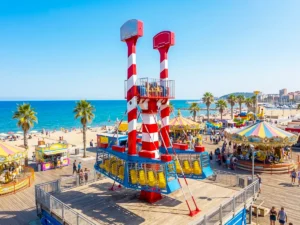




Understanding the different types of amusement park rides is an essential first step when planning a new attraction or expanding an existing venue. The choice is not simply between exciting and gentle equipment. Every ride affects the audience you can serve, the amount of land you need, the flow of visitors through the site, and the staffing and maintenance resources required after opening.
A park built around high-intensity attractions may appeal to thrill seekers, while a family-focused project needs experiences that different generations can enjoy during the same visit. Scenic destinations may prioritize views and landmark appeal. Indoor family entertainment centers (FECs) must consider building constraints and visitor circulation. This guide organizes the major amusement park ride names into useful purchasing categories and explains the questions to ask before requesting a layout or quotation.
How Are Amusement Park Rides Classified?
There is no single classification that answers every planning question. Operators usually benefit from looking at rides through three different lenses: guest experience, installation model, and venue type. A ride can belong to several groups at once. For example, a compact observation wheel may be a family attraction, a fixed installation, and a scenic-area landmark.
- By rider experience: Thrill rides emphasize acceleration, height, motion, or suspense. Family rides accommodate broader age groups subject to the manufacturer’s restrictions. Kiddie rides are designed for younger users. Observation rides focus on views and a calmer experience.
- By mobility: Fixed rides are planned around a permanent location and supporting infrastructure. Portable rides are configured for transport and repeat setup, which changes the importance of assembly, logistics, and site readiness.
- By site: Outdoor parks can accommodate a variety of track and tower structures; indoor FECs must examine clear height and building services; malls prioritize compatibility with public circulation; scenic areas may value sightseeing experiences and visual integration.
Start with the guests you intend to attract, then screen the available ride types against the physical site. A long list of possible attractions becomes more manageable once every candidate has a clear role in the project.
The Major Types of Amusement Park Rides
1. Roller Coasters
Roller coasters move passenger trains or cars along a designed track, creating changes in speed, direction, and elevation. They range from compact junior layouts and family coasters to more elaborate track systems with strong thrill appeal. The correct choice depends on the intended rider profile, available footprint, loading arrangement, and the team’s ability to maintain a complex mechanical attraction.
Consider more than the track’s occupied area. A coaster layout also needs access for queues, evacuation planning, inspections, and surrounding pathways. A family coaster may help broaden the park’s appeal, while a larger coaster may become a defining attraction for a thrill-oriented venue. Compare roller coaster configurations against the overall site plan before treating any model as a final selection.
2. Ferris Wheels and Observation Wheels
Ferris wheels lift passengers in cabins or gondolas for elevated views. They are particularly relevant when the surrounding landscape or urban skyline is part of the visitor experience. Wheel height influences visual prominence, structural design, cabin count, passenger flow, and the scope of foundations and site engineering. A central-location wheel can also serve as a wayfinding feature.
MODERN’s Ferris wheel range covers compact projects from 20 m through landmark observation wheels up to 120 m. These heights illustrate the breadth of the category, not a universal definition of a small or large wheel. Site conditions, expected visitor traffic, and the long-term operating plan should drive the choice.
3. Carousel Rides
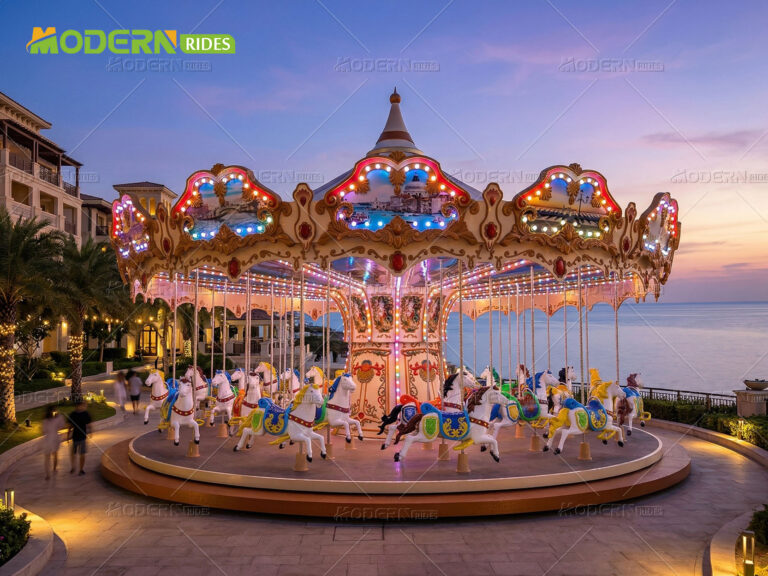
Carousels use a rotating platform with themed seats, often including traditional horse figures or decorative vehicles. They are recognizable classic theme park rides and can work as an accessible family-oriented anchor within a children’s zone or a public plaza. Their comparatively contained ride envelope makes them useful when a park needs a clear gathering point rather than a large linear attraction.
When evaluating carousel ride options, assess passenger seating, platform access, loading supervision, weather exposure, and the amount of circulation space around the ride. Mini, small, and vintage-styled designs can suit different themes; selecting the finish is only one part of choosing a practical operating configuration.
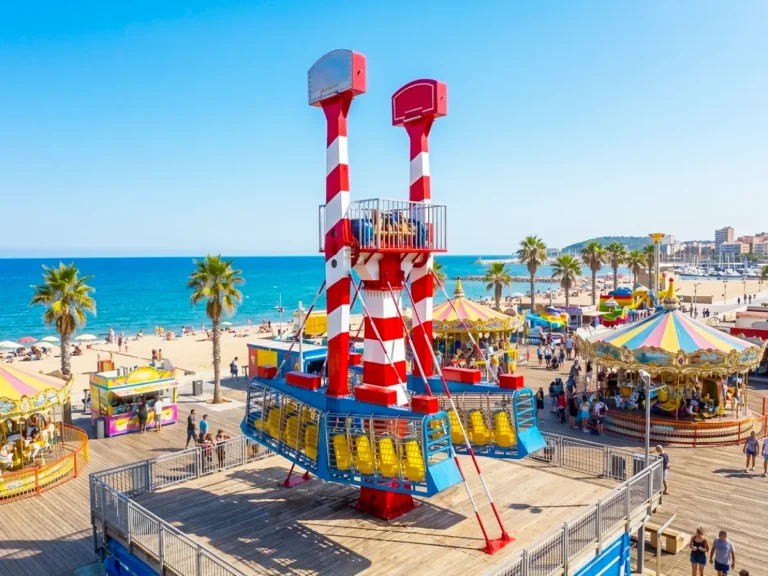
4. Pirate Ship and Swinging Ship Rides
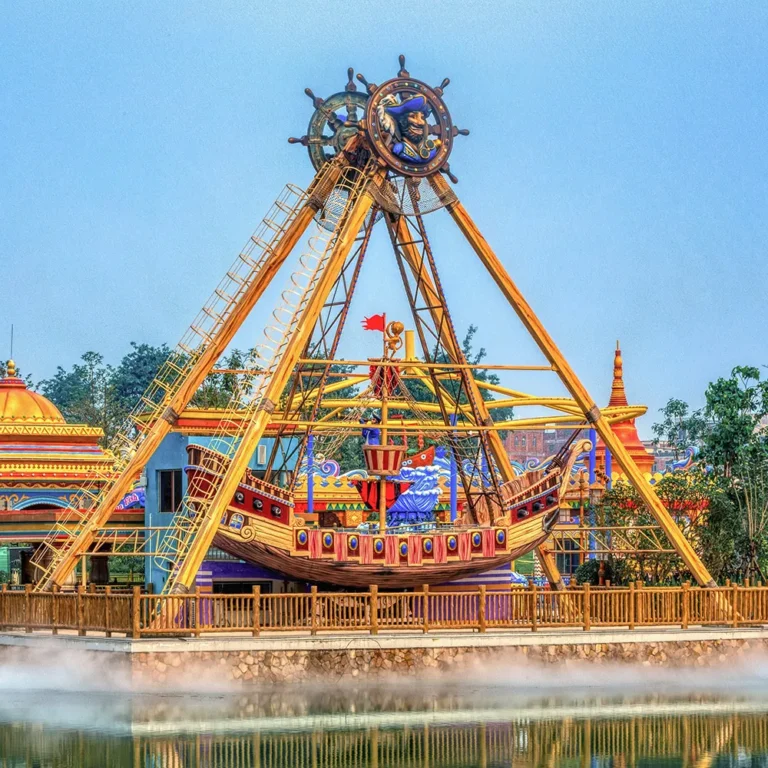
A swinging ship carries riders in a suspended, boat-shaped passenger body that travels back and forth through an arc. The repeated rise and descent create a familiar mid-thrill experience. This format can suit guests who want a more dynamic ride without choosing a large roller coaster. Mini and larger-capacity configurations serve different audience and site needs.
Evaluate the pirate ship ride range by passenger count, swing envelope, equipment height, foundation demands, and clearances around the moving boat. The visible footprint alone is not sufficient: the layout must also preserve controlled operating space and safe approaches to the loading area.
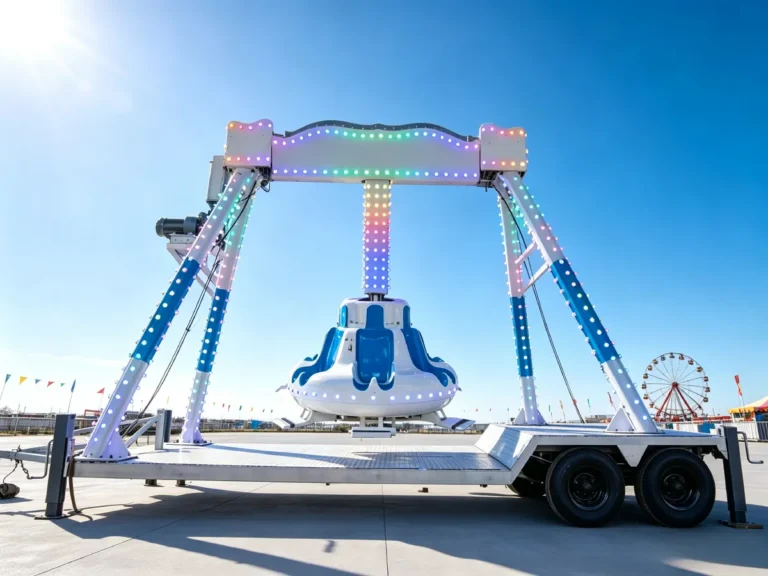
5. Pendulum Rides
Pendulum attractions use oscillating movement to generate changing forces and viewpoints. Depending on the design, the passenger assembly may also rotate while the supporting arm swings. They generally occupy a different planning role from a small family ride: their motion envelope, height, and visual impact require deliberate separation from circulation and nearby attractions.
When comparing pendulum ride designs, ask for the operating envelope, rider restrictions, loading procedures, and site-specific engineering requirements. Thrill positioning is important, but the final decision should also account for maintenance access and whether enough of the target audience can use the ride.
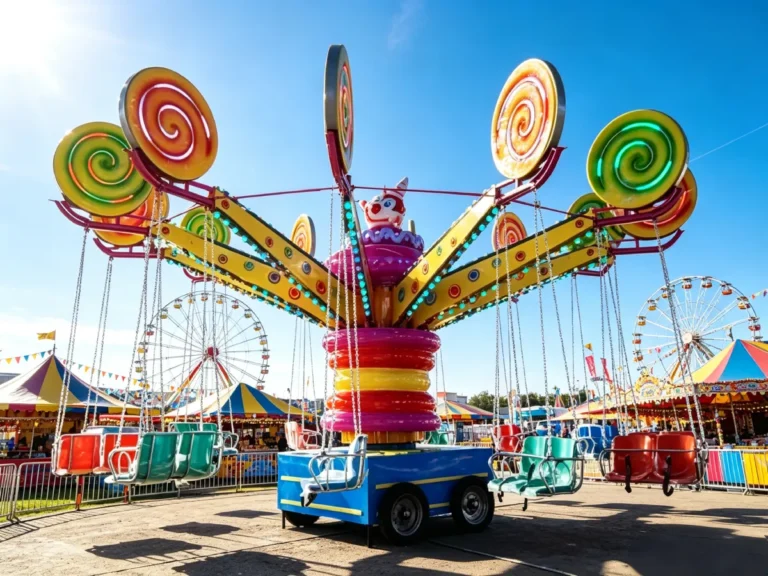
6. Flying Chair and Wave Swinger Rides
Flying chair rides suspend individual seats from a rotating structure. As the ride operates, the chairs move outward and create an open-air swinging sensation. They can provide a recognizable moving centerpiece in a family or mixed-thrill area, and the visual rhythm of the suspended seats may add atmosphere to a plaza.
For flying chair attractions, review the radius of the occupied ride envelope, rider entry and exit, nearby landscaping, and the separation between moving seats and surrounding areas. Operators should request model-specific limits and clearances rather than infer them from photographs or nominal equipment dimensions.
7. Bumper Cars and Dodgems
Bumper cars let guests steer vehicles within a defined arena. The attraction creates a different kind of engagement: riders actively control their movement and interact with other cars. It can appeal to repeat visitors and groups, but practical capacity depends on the number of cars, arena design, operating cycle, and staff procedures rather than car count alone.
Commercial bumper car systems can use battery, ground-grid, or ceiling-grid power arrangements. These alternatives affect floor construction, electrical infrastructure, charging or power distribution, and the feasibility of retrofitting an existing venue. Arena edge protection and pedestrian separation should be included in the original plan.
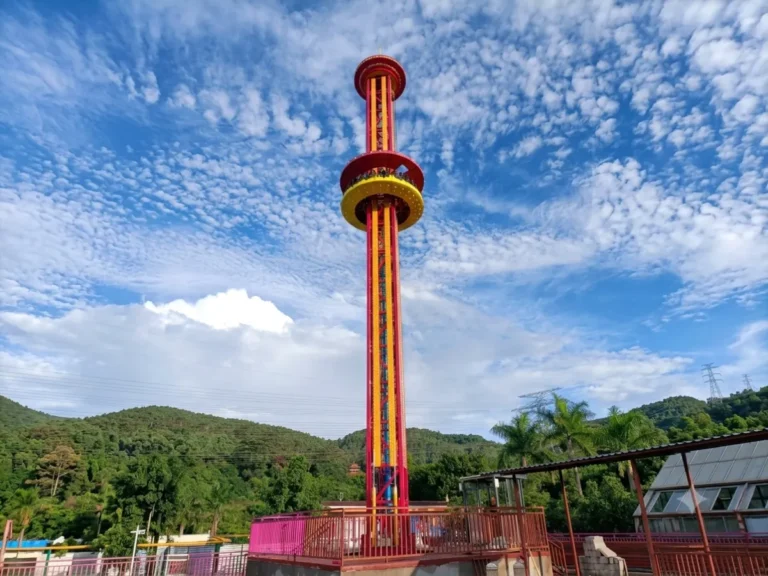
8. Drop Towers and Other Thrill Rides
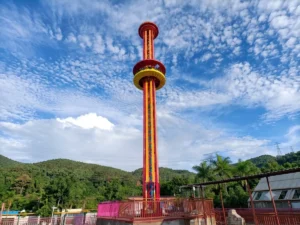
Drop towers emphasize vertical motion and anticipation. Other thrill categories include booster, kamikaze, and disco rides, each producing a distinct motion pattern and guest experience. They should be assessed individually rather than treated as interchangeable simply because they attract guests seeking stronger sensations.
Explore drop towers and other thrill rides in the context of your existing mix. A visually prominent thrill attraction may contribute to the park’s identity, but selecting several similar experiences without considering audience overlap can leave important visitor segments underserved. Require specific plans for restraints, loading, technical access, and the complete movement envelope.
9. Kiddie Rides
Kiddie rides typically use smaller passenger units, approachable motion, and themes intended for younger guests. Common concepts include compact rotating rides and miniature versions of familiar park attractions. They are often grouped into clearly identified children’s zones, where supervision, queue visibility, and caregiver movement can be managed consistently.
Use dedicated kiddie ride models to evaluate the fit for your intended age group. Do not assume a small-looking ride is automatically suitable for every child: the manufacturer’s published age, height, restraint, and supervision requirements must guide admissions. Plan nearby seating and paths for accompanying adults.
10. Portable and Travelling Rides
Portable amusement rides are built around the needs of operators who move equipment between fairs, events, or seasonal sites. Their commercial value lies in deployment flexibility, but transport dimensions and repeat assembly become major purchasing considerations. A portable version of a familiar ride type is therefore a different planning proposition from a permanently installed version.
Compare portable amusement ride options by loading and unloading method, setup requirements, utility connections, inspection procedures after transport, and the support needed at each new venue. A project with several operating sites should calculate the practical costs of moving, staffing, and preparing the equipment between engagements.
Building a Balanced Ride Mix
A useful first draft of a park plan separates attractions into three jobs: destination anchors that motivate a visit, broadly appealing family experiences that help mixed-age groups stay together, and age-appropriate children’s rides that complete the offering. The proportions should reflect the market rather than a fixed formula. A scenic project may rely on an observation wheel as an anchor; a regional theme park might emphasize a coaster; a compact FEC may prioritize interactive and family attractions.
Look at family ride options when there is a gap between the highest-intensity attractions and the children’s area. The objective is not to maximize the number of different mechanisms. It is to provide enough variety for the guests who will actually visit, including adults accompanying children and groups with different comfort levels.
Compare capacity with space in a consistent way. Ask each supplier for the model’s passenger capacity, approximate operating cycle, loading and unloading process, total required site envelope, and queue requirements. Nominal seats per cycle are not the same as realized hourly throughput: access rules, ride duration, dispatch discipline, and downtime all affect the result. A small ride with a well-designed queue may contribute more to visitor flow than a larger ride placed in a congested corner.
Finally, check whether the site operates year-round, seasonally, or at multiple locations. Permanent rides can be integrated into long-term landscaping and utilities; portable models may be worth considering where event calendars and relocation are central to the business plan. Leave room for later expansion, technical vehicles, and visitor circulation instead of filling every available area at the outset.
Safety and Quality Standards Buyers Should Know
Ride selection should include a document review, not just product photographs and prices. ASTM International’s F24 committee develops standards relating to amusement rides and devices. ASTM F2291 is a design practice that establishes criteria for ride design and major modifications. The U.S. Consumer Product Safety Commission also identifies ASTM voluntary consensus standards covering ownership, operation, maintenance, inspection, manufacturing quality, and measurement of dynamic characteristics. These references must not be confused with a single worldwide legal approval.
In Europe, the EN 13814:2019 series addresses fairground and amusement park machinery and structures. Its scope includes design safety rules as well as subjects such as operation, maintenance, control, and testing. Buyers should confirm which local laws, inspections, and technical documentation apply to their particular project and country.
CE marking and ISO 9001 can form part of supplier due diligence, but they answer different questions: applicable CE conformity obligations concern products placed on relevant markets, while ISO 9001 concerns the supplier’s quality management system. Neither replaces site engineering, model-specific records, operator training, or the authority’s acceptance process. Request evidence appropriate to the exact ride and destination jurisdiction.
Choosing a Supplier and Planning the Next Step
Before requesting a final offer, prepare a simple project brief: location, site dimensions, proposed guest groups, preferred ride categories, approximate visitor demand, power availability, opening schedule, and any local approval requirements. That brief enables more useful technical discussions than asking for a catalogue price alone.
- Manufacturing credentials: Ask for the relevant production licenses, quality-management information, and documentation for the proposed model.
- Layout and customization: Confirm what drawings, thematic options, foundation information, and operating clearances can be provided.
- Delivery scope: Clarify responsibilities for shipping, installation, commissioning, inspections, and staff training.
- After-sales operation: Discuss maintenance documentation, spare-parts planning, and how technical support will work over the ride’s service life.
MODERN is an amusement ride manufacturer based in Zhengzhou, China, established in 1999. Its stated capabilities cover ride design, production, shipping, installation, commissioning, training, and maintenance support; the company also reports CE and ISO 9001 certifications and Chinese special-equipment manufacturing and installation licenses. These are starting points for due diligence, not substitutes for checking a specific project.
If you are preparing a new park or expanding an attraction line, browse MODERN’s full amusement ride product range, then use the website to discuss your site layout, preferred ride mix, and requirements for a factory quotation. A clear plan built around guests, space, and operating needs is the best foundation for selecting suitable equipment.