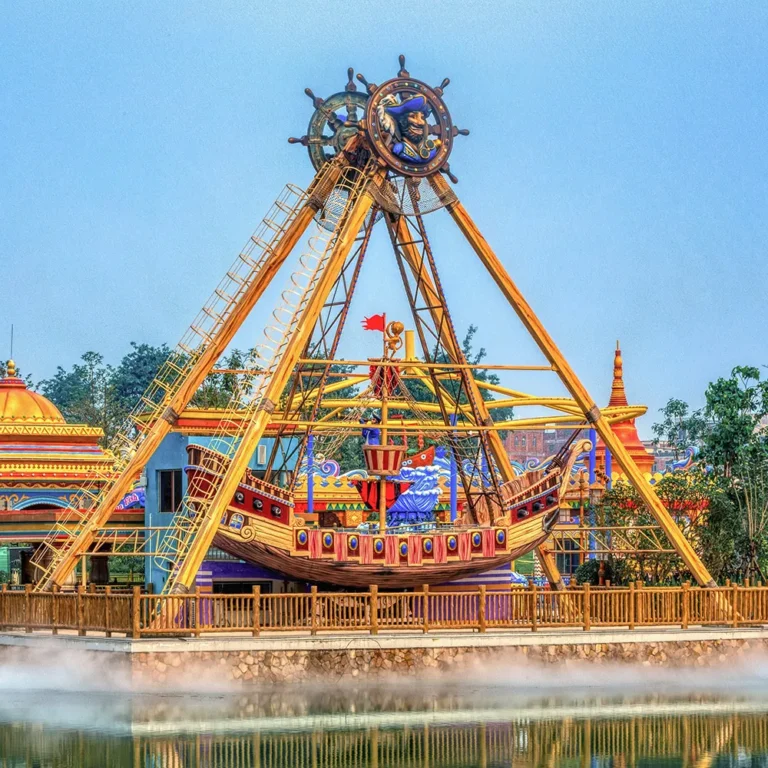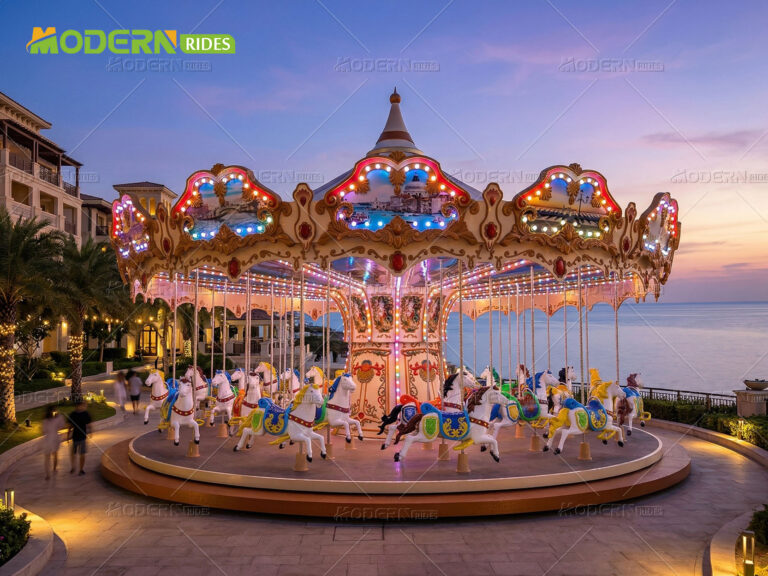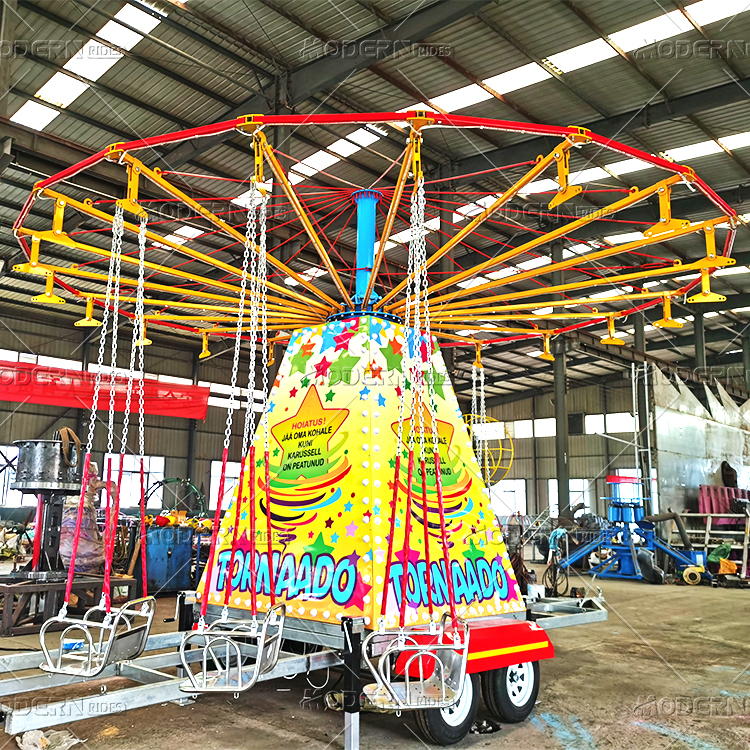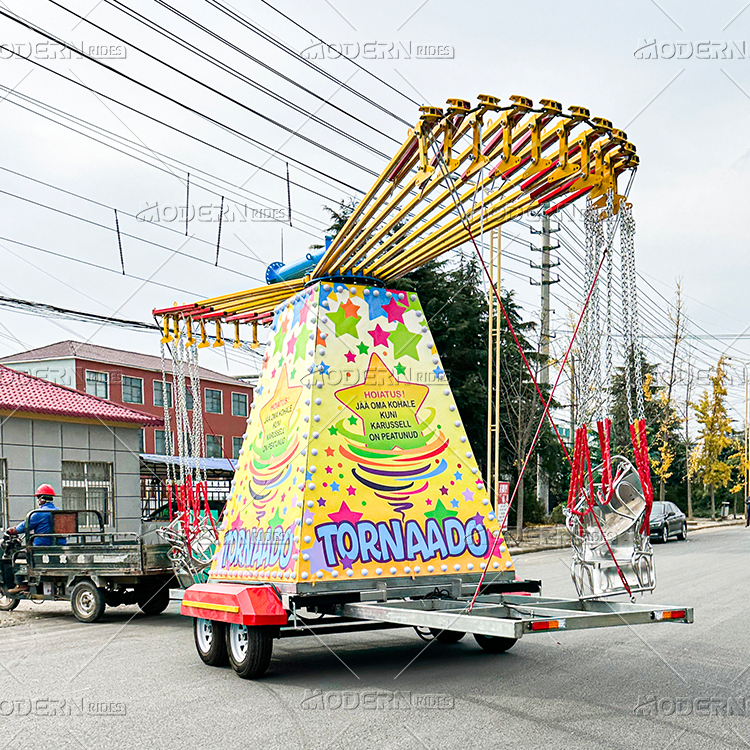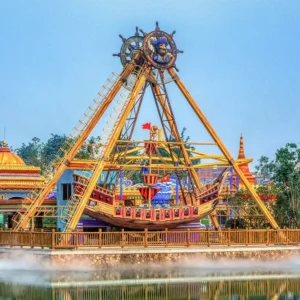





Planning portable amusement rides starts with the location, not with a product list. A ride that performs well at a traveling carnival may be inefficient for a small fixed park, while equipment suitable for a tourist attraction may require more installation space and infrastructure than a short-term event can provide.
The practical question is therefore not simply which portable ride is popular. Operators need to determine which combination fits the available land, visitor volume, event duration, transport conditions, power supply, and operating model. Matching these factors early can reduce layout conflicts and create a more efficient attraction mix.
MODERN provides portable amusement equipment and park planning solutions for different operating environments, from temporary fairs to fixed amusement projects.
What Makes Portable Amusement Rides Suitable for Different Locations
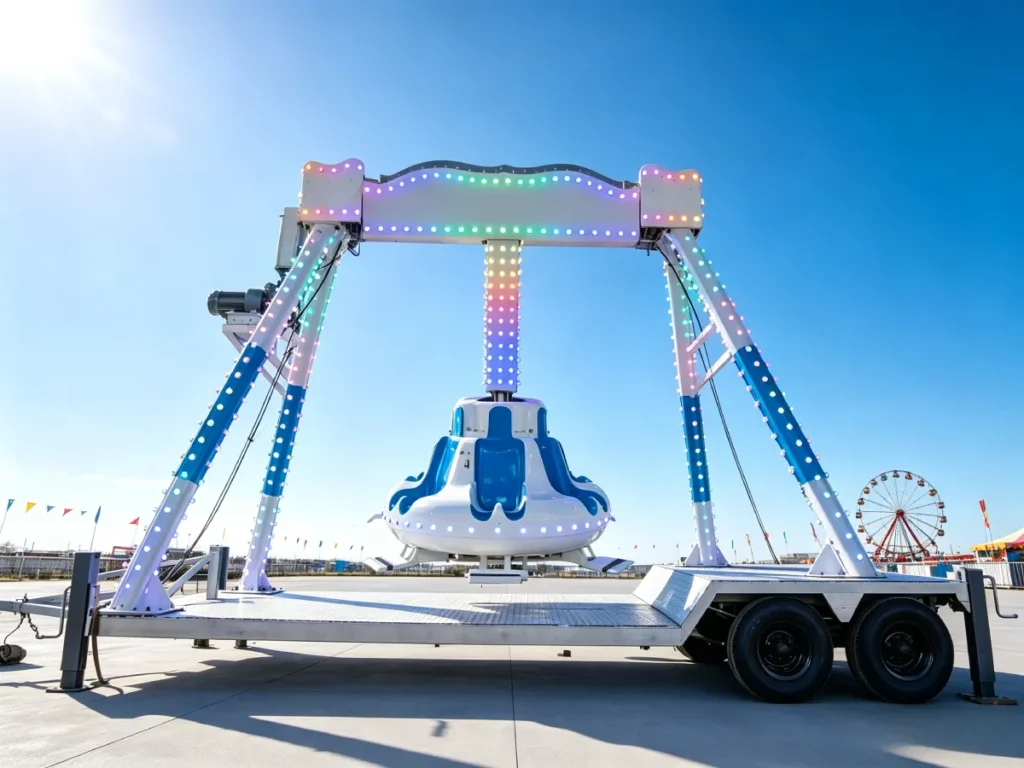
The value of portable amusement rides comes from their ability to support locations where mobility and site adaptability are important. However, portability does not mean that every ride can be placed at every venue.
Several practical characteristics should be considered:
- Mobility: The equipment should fit the transport frequency and relocation plan of the operator.
- Setup requirements: Installation complexity should match the available setup window, labor, and lifting equipment.
- Site adaptability: Ground conditions, access, dimensions, and surrounding structures affect placement.
- Transportation: Vehicle access and shipping dimensions need to be considered before selecting equipment.
- Installation: Power connections, assembly areas, safety clearances, and inspection requirements should be planned before arrival.
For a frequently moving carnival, quick relocation may be a priority. A seasonal attraction operating for several months can accept a more involved installation if the ride offers greater capacity or visual impact.
How Venue Type Changes Your Portable Amusement Ride Selection
Different venues create different operating priorities. Traveling carnival rides, for example, need to balance visitor appeal with repeated transportation, assembly, dismantling, and movement between event locations.
A traveling carnival generally benefits from equipment that can be efficiently moved while still creating a strong visual attraction. Operators also need to consider the sequence in which rides arrive, are assembled, and leave the site.
Seasonal fairs operate differently. Because equipment may remain in one location for weeks rather than days, operators can consider rides with somewhat greater setup requirements if they provide suitable capacity.
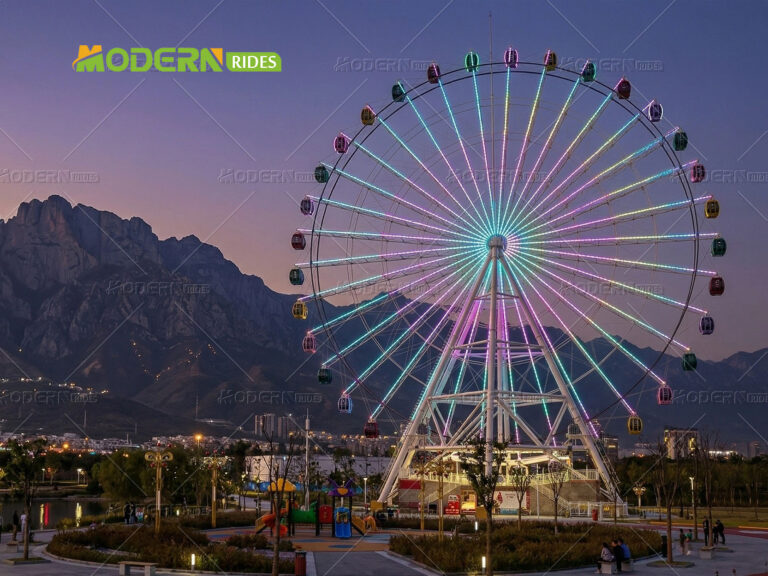
Tourist attractions may prioritize appearance and integration with the surrounding destination. A temporary entertainment venue, meanwhile, may prioritize fast deployment and efficient use of rented land.
A small fixed park has another requirement: the rides may be portable in design, but they need to form a balanced long-term attraction portfolio. The operating model should therefore determine the ride mix rather than treating every portable venue in the same way.
How Available Space Affects Portable Ride Planning
Available land should be evaluated as usable operating space, not simply as the total site area. The equipment footprint is only one part of the actual space requirement for portable amusement rides.
Buyers should account for:
- Ride footprint: The physical operating area required by the equipment.
- Safety clearance: Additional space must be maintained around moving structures according to applicable requirements.
- Queue area: High-demand attractions need sufficient space for organized waiting lines.
- Access routes: Installation vehicles, maintenance personnel, and emergency access need clear routes.
- Passenger flow: Entrances and exits should not create unnecessary conflicts between attractions.
- Power supply: Electrical distribution should be planned according to equipment locations and specifications.
These considerations are particularly important when planning small amusement park rides. In a limited site, installing the maximum possible number of attractions can actually reduce operational quality if queues block pathways or visitors cannot move comfortably between rides.
A better approach is to map ride footprints, clearances, queues, walkways, service access, and utilities before finalizing the equipment order.
How to Build a Portable Ride Mix for Different Event Sizes
A good portable ride portfolio should reflect event scale, expected attendance, available space, and the type of experience the operator wants to create.
| Event Type | Suitable Ride Strategy | Main Consideration |
|---|---|---|
| Small Event | Compact ride mix | Footprint |
| Regional Fair | Mixed ride portfolio | Capacity + mobility |
| Large Event | High-impact combination | Visibility + throughput |
At a small event, several compact attractions may be more practical than one large ride that consumes a disproportionate amount of available land. The goal is to create enough variety without making circulation difficult.
For regional fairs, the portfolio can combine visually recognizable attractions with rides serving different visitor groups. Mobility remains important because the equipment may still need to move between seasonal locations.
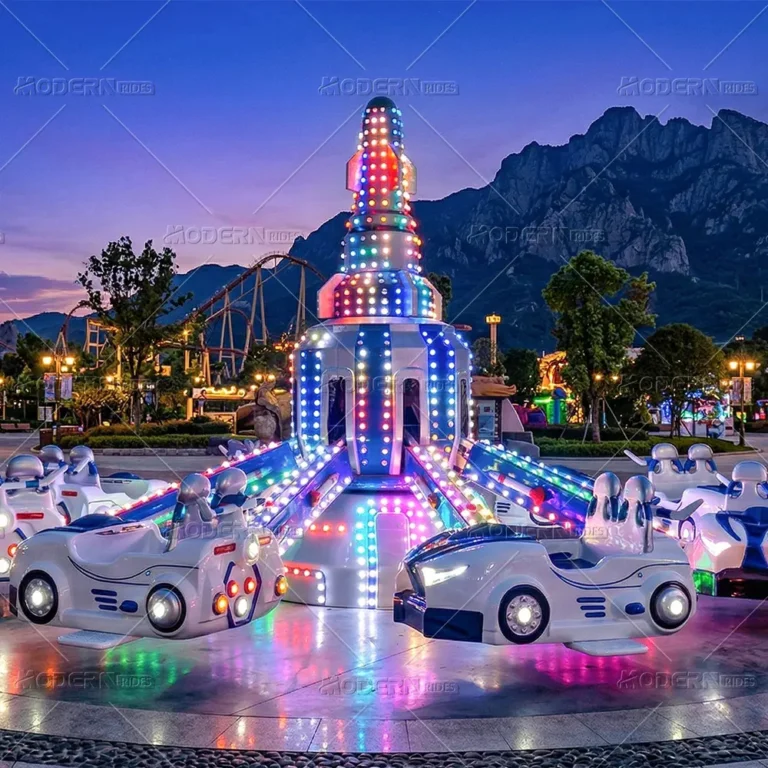
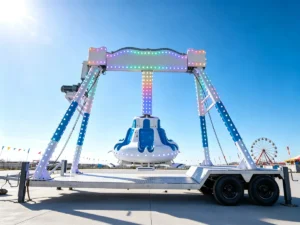
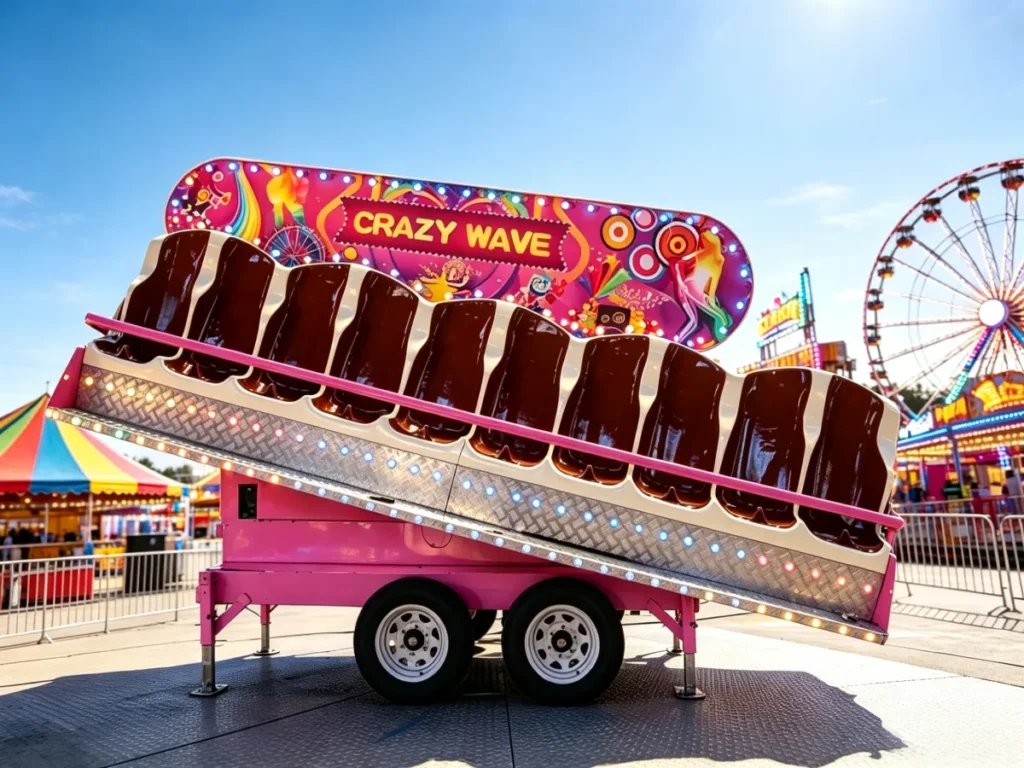
Large events can use stronger visual anchors together with supporting attractions. MODERN’s current product range includes portable models such as the Portable Crazy Dance, while its broader portable amusement ride category is designed for fairs and temporary events.
The selection should still be based on the complete site. A visually impressive attraction provides limited operational value if its location creates queues or reduces access to surrounding rides.
What Buyers Should Prepare Before Ordering Portable Rides
Before requesting quotations, buyers can make equipment selection more accurate by providing suppliers with practical project information rather than asking only for a catalog and price.
Useful information includes:
- Available site dimensions: Provide usable dimensions and, when possible, a site plan.
- Expected visitor volume: Estimated attendance helps determine appropriate ride capacity and portfolio size.
- Event duration: A three-day event has different setup priorities from a seasonal attraction.
- Transport conditions: Explain how frequently equipment will move and any local access limitations.
- Power requirements: Provide the available voltage, frequency, and electrical infrastructure.
- Local safety requirements: Identify applicable approval, inspection, or certification requirements.
- Target ride types: Explain the desired audience and experience instead of selecting only by appearance.
This information allows MODERN to evaluate equipment together with layout and operating conditions. The company states that its services cover conceptual design, equipment production, project implementation, and on-site installation support.
For buyers planning multiple portable amusement rides, sharing the complete project requirements can also help identify potential conflicts between equipment dimensions, visitor circulation, and installation logistics before delivery.
结论
The best portable amusement rides are not simply the easiest rides to move. They are the rides that fit the venue, visitor flow, transportation plan, installation conditions, and overall operating strategy.
Traveling carnivals should give greater weight to repeated setup and transport efficiency. Seasonal fairs can balance mobility with capacity. Small parks need to pay particular attention to space utilization and attraction mix, while larger events can combine high-visibility equipment with rides designed to support visitor throughput.
MODERN reports more than 2,000 global product cases and service across more than 100 countries, giving the company experience with different project environments and operating conditions. For buyers planning a new portable ride project, providing site dimensions, expected visitor volume, event duration, transportation conditions, power information, and target ride types is a stronger starting point than choosing equipment from a catalog alone.