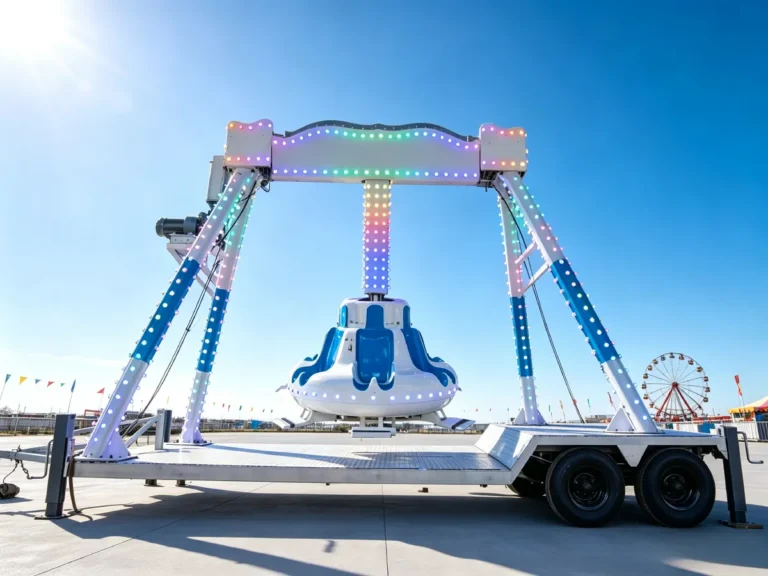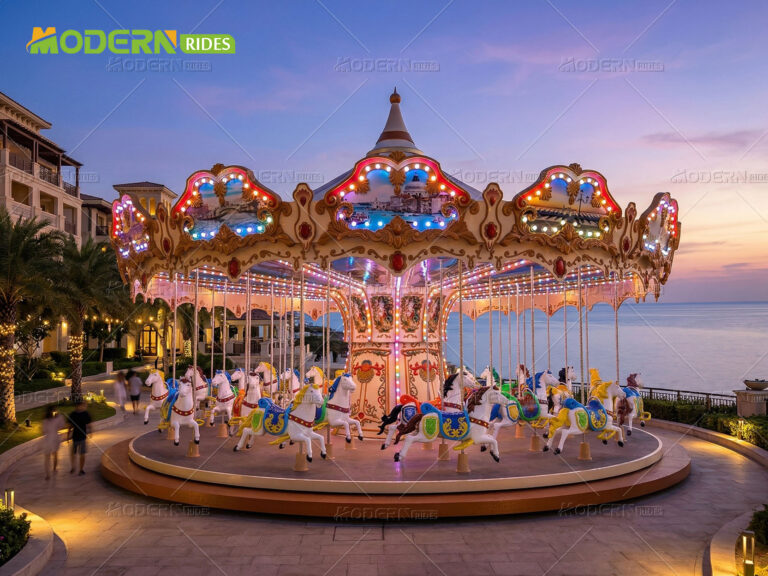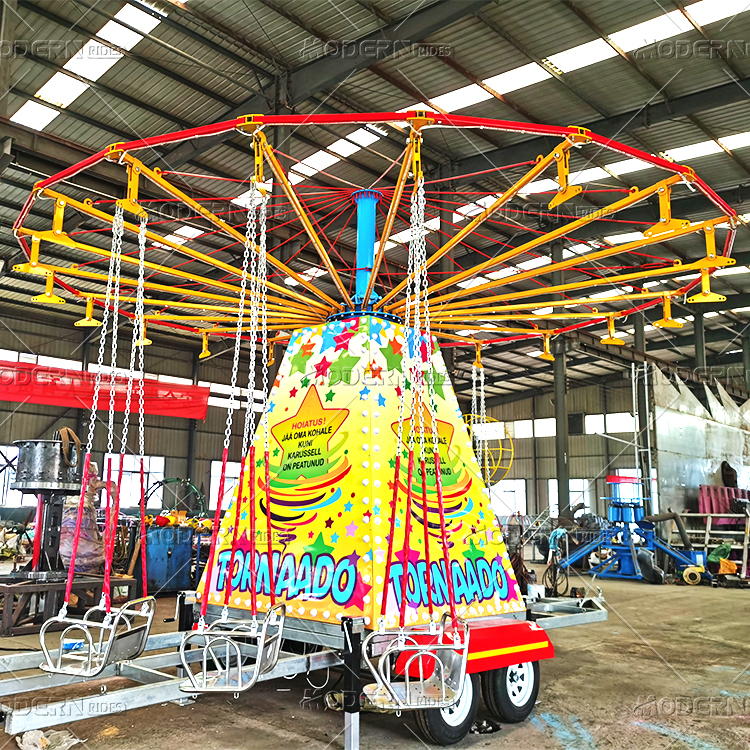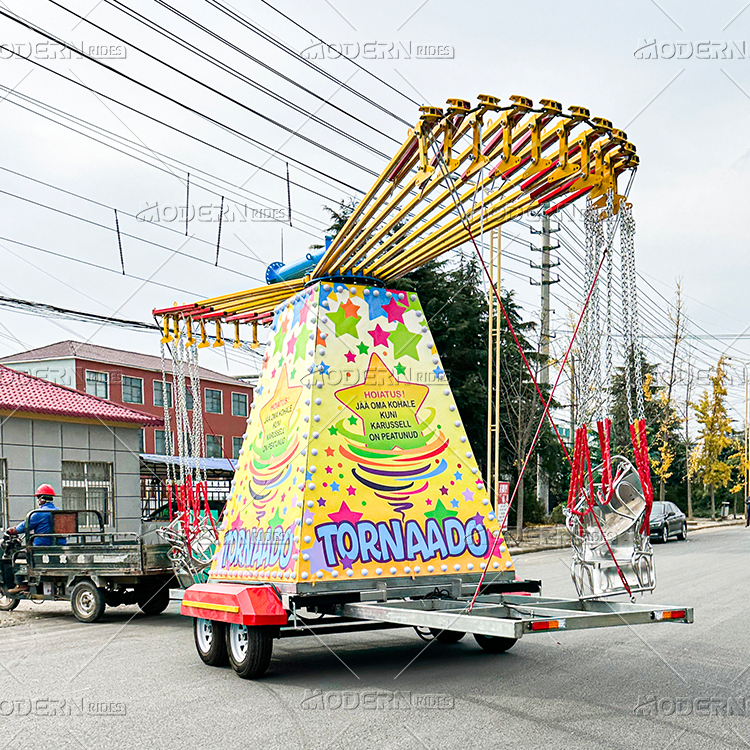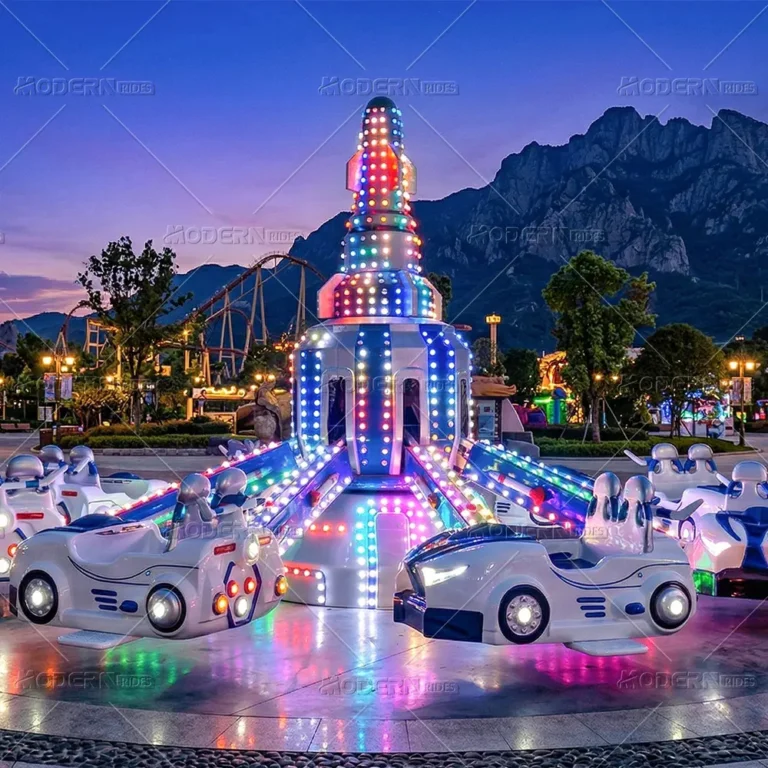





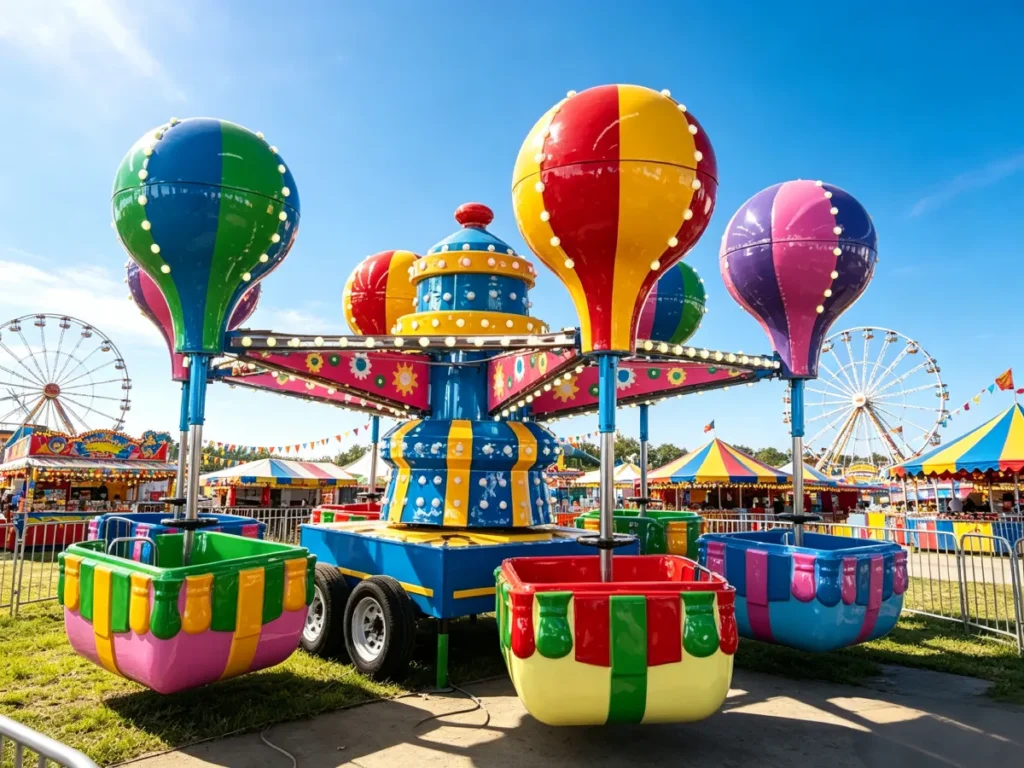
For carnival operators, seasonal amusement businesses, and event companies, the real value of portable carnival rides is not simply that they can be moved. Their practical advantage comes from being able to operate repeatedly across different venues with manageable transport, setup, dismantling, and storage requirements.
A traveling business may use the same ride portfolio at fairs, temporary venues, regional events, and seasonal attractions throughout the year. This means equipment should be evaluated as part of an operating system rather than as individual attractions.
MODERN provides amusement ride manufacturing, project implementation, installation support, and solutions for traveling and seasonal amusement operations.
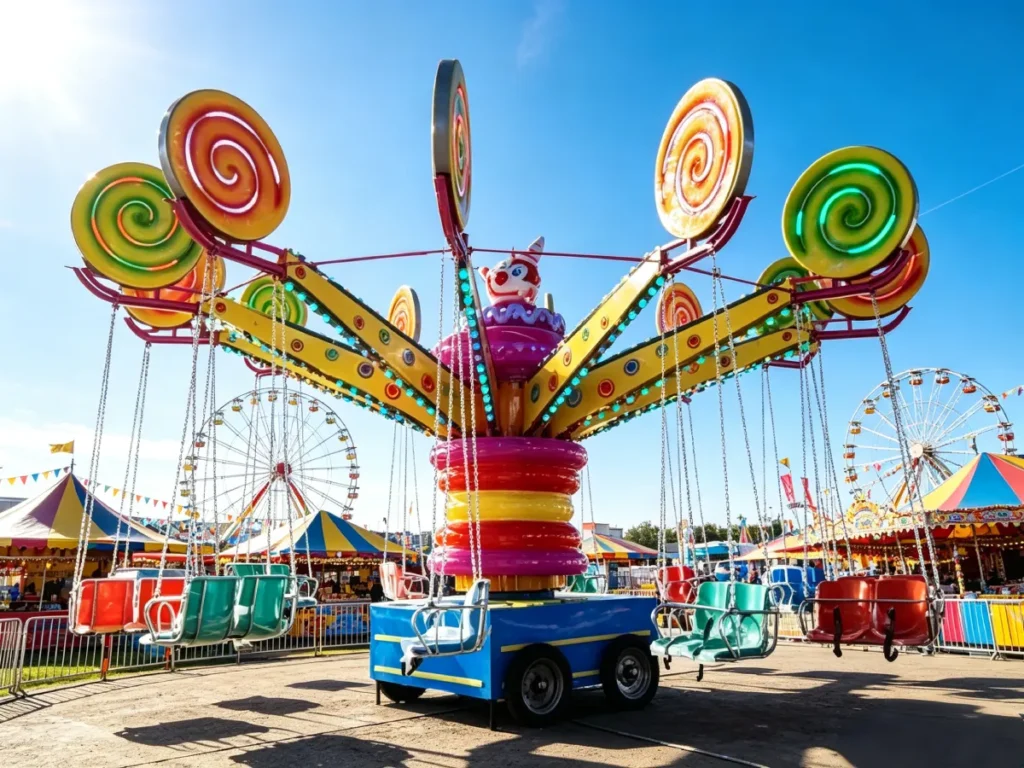
Why Mobility Matters in Seasonal Carnival Operations
Portable carnival rides are especially useful for seasonal businesses because they allow the same equipment to serve multiple temporary venues without requiring permanent installation.
Seasonal operators often work within short event windows. A fair may operate for several days or weeks before the equipment needs to move to another location. In this model, transportation, installation, and dismantling time directly affect labor planning and operating efficiency.
Mobility also gives operators more flexibility when schedules change. Instead of investing in a separate attraction for every location, a traveling business can reuse the same ride portfolio across several events.
This makes portable carnival rides particularly suitable for operators whose revenue depends on repeated deployment rather than year-round operation at one fixed park.
How Portable Rides Support Multi Location Operations
Portable rides support multi-location operations by allowing one attraction portfolio to serve several events during the same operating season.
The value comes from repeatable deployment rather than movement alone.
Key advantages include:
- Higher equipment utilization: The same rides can operate at different events instead of remaining idle at one site.
- Flexible event scheduling: Operators can assign rides according to venue size and expected attendance.
- Better portfolio allocation: Compact rides can serve smaller locations, while larger attractions can be reserved for major fairs.
- More predictable logistics: Repeated use makes transport, loading, installation, and dismantling easier to standardize.
- Greater seasonal coverage: A planned event calendar allows the same equipment to generate revenue in multiple markets.
For traveling operators, the event schedule, ride mix, transport resources, and setup requirements should therefore be planned together.
How to Select Rides for Small and Large Carnivals
Ride selection should match expected attendance, usable site area, visitor mix, and operating capacity.
For small events, a compact ride portfolio may perform better than several large attractions competing for limited space.
Useful planning principles include:
- Small events: Prioritize compact footprints and simple setup.
- Regional fairs: Combine family rides with visually stronger attractions.
- Large events: Use a mix of high-capacity and high-visibility rides to support throughput and attraction value.
This is where small carnival rides can be particularly useful. Their smaller footprint can help operators maintain enough space for queues, walkways, service access, and neighboring attractions.
The best ride mix should reflect the scale of each event rather than using the same configuration everywhere.

What to Consider When Buying Carnival Rides for Different Events
When evaluating carnival rides for sale, buyers should compare operational requirements as carefully as appearance and purchase price.
Important factors include:
- Passenger capacity: Higher-capacity rides may suit events with concentrated attendance.
- Footprint: Ride space must include queues, safety clearance, and circulation.
- Setup time: Short events benefit from efficient installation.
- Transportation: Trailer requirements and route limitations affect relocation costs.
- Storage: Equipment may need protected storage between events or seasons.
- Maintenance: Components should remain accessible for inspection and servicing.
Buyers comparing carnival rides for sale should ask how each attraction fits into their full operating model. A visually impressive ride may still be unsuitable if transport or setup requirements are too demanding.
How to Plan Transportation Setup and Storage Together
The most practical way to manage portable carnival rides is to plan transportation, installation, operation, dismantling, and storage as one connected lifecycle.
The cycle is:
Transportation → Installation → Operation → Dismantling → Storage
Transportation planning should consider equipment dimensions, available vehicles, route conditions, and unloading access. Installation then depends on site space, ground conditions, labor, power supply, and inspection requirements.
During operation, maintenance access and spare-part planning matter. After the event, dismantling should be organized so components can be loaded efficiently.
Storage completes the cycle. Equipment that remains unused for weeks or months may require cleaning, inspection, protection, and maintenance before the next deployment.
The key principle is that a problem at one stage creates delays at the next. For seasonal operators, the best equipment is the equipment that can move through this entire cycle efficiently and repeatedly.
Why Portable Ride Planning Should Follow the Operating Calendar
A portable ride portfolio should be planned around the operator’s seasonal calendar because event timing determines transport frequency, setup windows, and equipment utilization.
If two events are scheduled too close together, even highly portable equipment may create operational pressure. Operators should consider travel distance, dismantling time, installation time, required inspections, and maintenance between events.
This calendar-based approach helps prevent overloading transport teams and allows rides to be assigned to venues where they create the most value.
For multi-location businesses, the operating calendar is therefore just as important as the ride catalog.
Conclusion
Portable carnival rides should be evaluated as part of an operating system rather than as individual attractions.
For seasonal and multi-location operators, the best ride portfolio balances mobility, passenger capacity, setup requirements, transportation, maintenance, storage, and event scheduling. Small events may benefit from compact ride mixes, while larger fairs require broader combinations of capacity and visual impact.
The real advantage of portability is not simply movement. It is the ability to reuse the same assets efficiently across different venues and operating periods.
MODERN supports this model through amusement ride manufacturing, equipment production, project implementation, installation support, and global project experience.