




Adult bumper cars are a familiar choice for theme parks, indoor family entertainment centers (FECs), shopping-mall attractions, and seasonal entertainment venues. Unlike a passive ride, a bumper car arena lets guests steer their own vehicles and interact with other participants. That combination makes the attraction relevant to group visits and repeat ride sessions, provided the operator has an arena and operating procedure suited to the expected audience.
Buying bumper cars for adults means selecting more than an attractive body style. The power system determines much of the supporting infrastructure; the car dimensions and approved load affect rider suitability; and the floor layout sets the limits for circulation, supervision, and operating capacity. MODERN supplies several commercial configurations, and its bumper car and dodgem range provides a starting point for comparing the options discussed below.
What Makes a Bumper Car an Adult Model?
The term adult bumper car should describe a model engineered and rated for the intended adult riders, not just a larger-looking shell. Relevant specifications include body dimensions, stated maximum load, drive-system characteristics, seating arrangement, operating speed, and the manufacturer’s rider and restraint rules. A supplier should identify the exact model and provide its published technical documentation before the buyer assumes it can accommodate a particular guest group.
Children’s bumper cars often differ in scale and intended use. Mini cars and interactive spin-zone products serve a different experience from a conventional adult dodgem arena. MODERN also has a separate kiddie rides collection, which is useful when a venue plans both children’s and adult attractions. Where families are the core market, the age and height restrictions should guide whether the arena requires an adult model, a family model, or a dedicated children’s zone.
Do not use exterior dimensions alone as proof of suitability. Two cars with similar bodies may have different load ratings or power arrangements. Likewise, a high-torque adult configuration does not remove the need for suitable speed management, defined operating boundaries, and staff supervision.
Three Power Systems Compared
Commercial electric bumper cars generally fall into three broad power arrangements: onboard battery power, electricity supplied through a conductive floor system, and power collected from an overhead ceiling grid. MODERN’s line includes all three. None is the universal best choice; the practical answer depends on venue construction, operating schedule, relocation plans, and maintenance resources.
Battery-Powered Bumper Cars
Battery-powered bumper cars carry their electrical energy onboard, so the attraction can be planned without using the floor or ceiling as the vehicle’s continuous power pickup system. This can simplify certain retrofit situations and may be attractive where the operator wants flexibility in how the arena is arranged. However, battery charging, storage, inspection, and eventual replacement must be incorporated into the operating plan. The floor still needs to be suitable for vehicle movement, and guardrails remain necessary.
Ask the manufacturer to confirm charger requirements, expected operating arrangement, charging location, electrical protection, and the procedures needed between sessions. Battery capacity by itself is not a verified runtime figure: rider load, driving conditions, and the duty cycle matter. A quote should distinguish supplied batteries and charging equipment from the wider venue works.
Ground-Grid Electric Bumper Cars
Ground-grid cars receive power through a designed floor pickup arrangement. This can be attractive for a dedicated, permanently installed dodgem arena because the electricity supply is integrated into the operating surface. The main planning consequence is the floor itself: its electrical components, levelness, isolation provisions, and maintenance access must be specified for the selected model and local requirements.
For a new venue, the ground system can be considered from the beginning of construction. For a retrofit, confirm whether the existing base, finished floor height, drainage, and surrounding access can accommodate the required system. The supplier should clearly separate the ride-equipment scope from any civil or building alterations.
Ceiling-Grid or Skynet Dodgem Cars
Ceiling-grid bumper cars use an overhead power distribution arrangement, commonly associated with a vehicle collector that connects to the grid. The layout therefore involves both the riding floor and the structure above it. Ceiling height, grid support, clearance, and the relationship with lighting and other building services deserve review before a model is selected.
For an established indoor dodgem hall with suitable overhead infrastructure, this configuration may fit the intended operating concept. A shopping mall or an FEC without that infrastructure needs a more detailed feasibility assessment. The overhead system is not simply a decorative accessory; it affects construction coordination and future inspection access.
Power-System Decision Summary
| Configuration | Main site requirement | Typical planning appeal | Operating question |
|---|---|---|---|
| Battery-powered | Suitable riding surface and charging provision | Flexible arena planning and some retrofits | How will charging and battery care fit the schedule? |
| Ground-grid electric | Engineered conductive floor system | Dedicated arena with integrated floor power | What floor works and inspections are required? |
| Ceiling-grid or skynet | Suitable overhead structure and power grid | Permanent indoor installation with planned overhead services | Are height, support, and maintenance access adequate? |
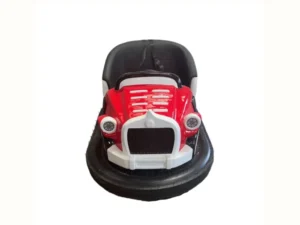
Appearance can be evaluated separately from power infrastructure. For example, a themed attraction may consider vintage-style bumper cars as part of the guest experience, while still confirming the exact vehicle’s electrical configuration and installation requirements.
Adult Bumper Car Sizes and Published Model Specifications
Published equipment data is more helpful than a generic description such as “standard adult size.” The table below uses specific MODERN model examples. These are manufacturer-listed specifications for the named models, not minimum requirements or universal dimensions for every bumper car sold in the market.
| MODERN model | Body dimensions | Rated load | Published speed | Motor and power details |
|---|---|---|---|---|
| Vintage-style BCT02Z35 | 1925 x 1150 x 920 mm | 200 kg | Under 7 km/h | 90 V, 280 W motor |
| Skynet BCT02Z01-9 | 1925 x 1150 x 800 mm | 200 kg | Under 7 km/h | 90 V, 280 W motor |
| Gold-flecked BCT02Z32 / BCT02Z01-2 | 1925 x 1150 x 800 mm | 200 kg | Under 7 km/h | 24 V, 400 W rear brushless motor; 12 V 60 Ah batteries x 2 |
| Battery BCT02Z34 | 1925 x 1150 x 920 mm | 200 kg | Under 7 km/h | 24 V, 400 W rear brushless motor; 12 V 60 Ah batteries x 2 |
The published weight, including batteries, is 155 kg for the listed gold-flecked and BCT02Z34 battery examples. A purchaser should confirm current specifications with the manufacturer before preparing the final civil or electrical design. In particular, do not infer a vehicle’s passenger number from its 200 kg load rating; permitted occupancy and rider restrictions must come from the actual model documentation.
Floor Planning, Car Count, and Throughput
A useful bumper car layout starts with a dimensioned venue drawing rather than a preferred number of cars. Include the usable driving surface, perimeter guardrails, entry and exit gates, staff control position, pedestrian approaches, emergency access, and any electrical or charging equipment. MODERN’s stated turnkey scope can include custom steel floor plate layouts, guardrails, smart power control cabinets, and 3D venue layout planning. Confirm which elements are included in your proposed package.
Car dimensions are only one part of sizing an arena. Vehicles need room to turn, move around each other, and operate without creating an overly congested experience. A simple ratio of arena area to car body area cannot establish a safe or comfortable fleet size. Instead, request a model-specific layout indicating the proposed number of simultaneously operating vehicles and the clearances used in that recommendation.
To plan capacity, separate instantaneous capacity from hourly throughput. The first is the number of guests the approved operating fleet can serve at once. The second depends on the number of sessions per hour, session duration, loading and unloading time, and the number of usable cars. Allow for cleaning, routine checks, and any operating interruptions. Supplier assumptions should be documented so that projected throughput does not quietly become a guaranteed result.
Which Configuration Fits Your Venue?
- Outdoor amusement park: Evaluate weather exposure, drainage, floor durability, reliable power, and the extent of any sheltered queue or charging area. Select an outdoor-suitable package only after the manufacturer confirms the environmental requirements.
- Indoor FEC: Assess ceiling clearances, ventilation and building services, guest circulation, and sound management. Compare the installation impact of battery, ground-grid, and ceiling-grid systems before signing a lease or renovating a room.
- Shopping mall: Obtain early approval for the intended floor loads, electrical connections, access, operating boundary, and emergency procedures. A visually compact arena may still require significant supporting infrastructure.
- Carnival or moving operation: Pay particular attention to transport, setup and teardown, repeated floor preparation, charging or distribution equipment, and inspections after relocation.
New-build sites offer the opportunity to coordinate floors and electrical systems from the start. Retrofits must work within an existing structure, so a site survey and supplier drawing review can prevent expensive assumptions. Operators should also compare staffing needs and daily maintenance tasks, not just initial equipment scope.
Safety, Standards, and Documentation
Bumper car operation requires deliberate attention to rider restraints where specified, permitted speeds, vehicle condition, floor integrity, guarded boundaries, and staff procedures. Ask for the exact model’s restraint information, operating limits, inspection instructions, and rider rules. A published speed below 7 km/h for a particular model is not a substitute for a comprehensive safety assessment.
ASTM F2291 is a voluntary consensus design practice establishing criteria for amusement ride design and major modifications. The U.S. Consumer Product Safety Commission also lists other ASTM voluntary standards addressing operation, inspection, maintenance, manufacture, construction quality, and dynamic-characteristic measurement. These references are not blanket approvals or a substitute for the applicable law in the installation location.
For equipment supplied into European markets, ask what CE-related conformity assessment, documentation, and local obligations apply to the specific equipment and its intended use. Review certificates and declarations rather than assuming a supplier-wide statement automatically establishes compliance for every model. Installation acceptance and the operator’s procedures remain separate responsibilities.
Buying Checklist and Next Steps
MODERN is based in Zhengzhou, China, and was established in 1999. Its stated credentials include CE and ISO 9001 certifications and Chinese licenses for special-equipment manufacturing and installation. The company reports delivery to more than 100 countries and services spanning planning, production, shipping, installation, commissioning, training, and maintenance support. Buyers can review MODERN’s manufacturing and service background while requesting model-specific evidence.
- Provide the venue dimensions, floor conditions, indoor or outdoor status, and available electrical service.
- State whether the target guests are adults, mixed-age families, or children, and request applicable rider restrictions.
- Compare the three power systems on full installation scope, not only vehicle purchase price.
- Request a scaled arena drawing, proposed fleet count, power details, controls, and perimeter protection plan.
- Confirm commissioning, operator training, maintenance documentation, spare parts, and support responsibilities.
- Ask for an itemized quotation that distinguishes equipment from civil work and site-specific services.
To assess adult bumper cars for your project, review the models and contact MODERN for a factory quotation or venue layout discussion. Share your floor plan, intended audience, and preferred power arrangement so the proposal can address the practical requirements of the installation.