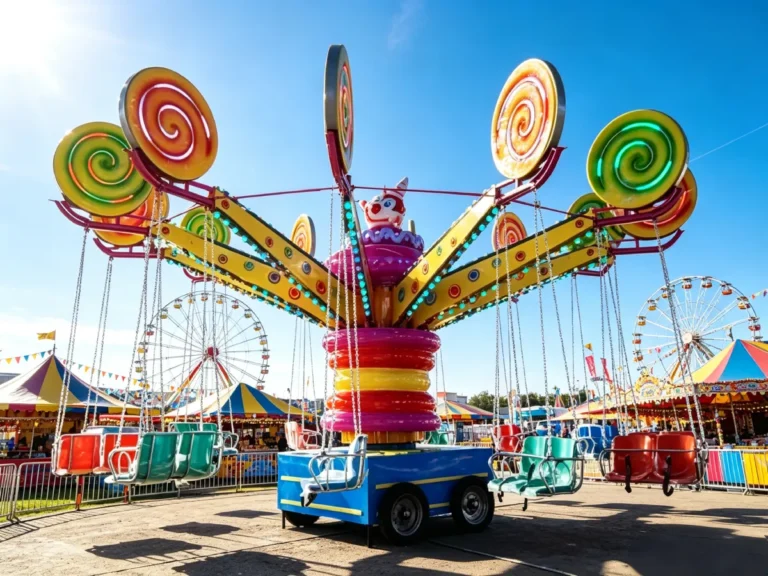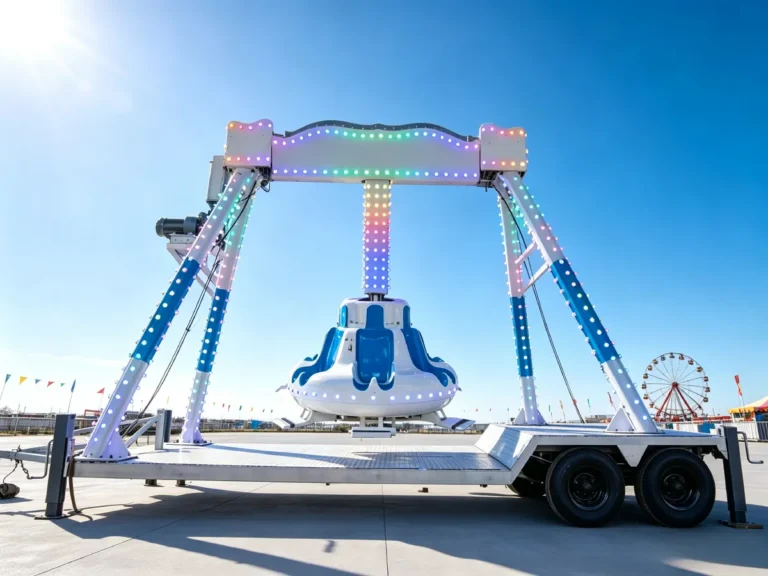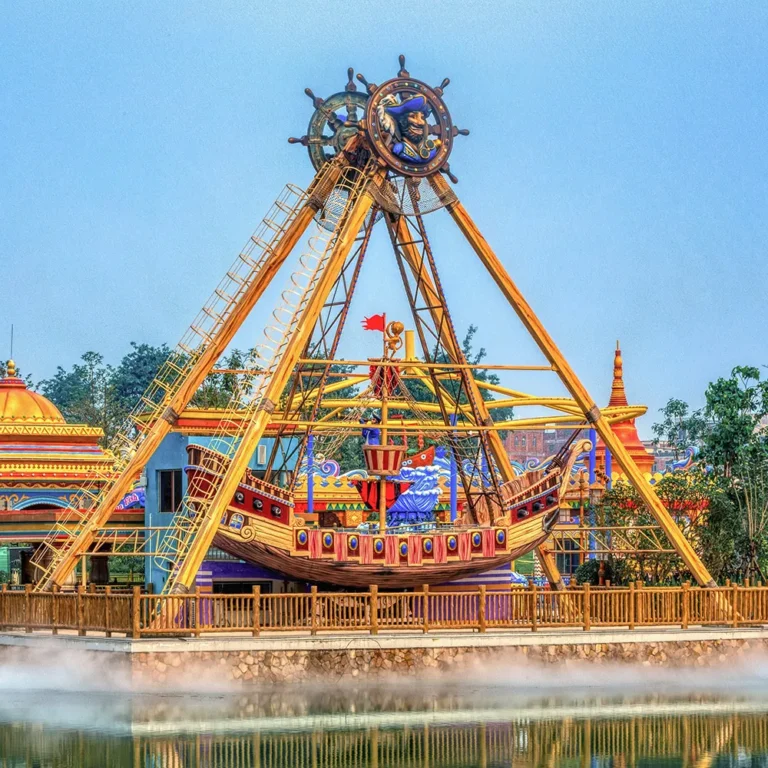



Choosing thrill rides for an amusement park should begin with project conditions rather than simply selecting the tallest or fastest attraction. Park size, visitor profile, available land, power infrastructure, visual goals, expected throughput, and long-term operating capability all influence which ride creates the most value.
For some projects, a pendulum ride can become a highly visible anchor with a relatively defined footprint. For others, a roller coaster may provide a stronger destination effect but require substantially more land, track planning, station space, and circulation design.
MODERN supplies different thrill attraction categories, including big pendulums, drop towers, Kamikaze rides, boosters, sky flyers, and roller coasters for projects ranging from regional amusement parks to larger destination venues.
What Role Do Thrill Rides Play in an Amusement Park
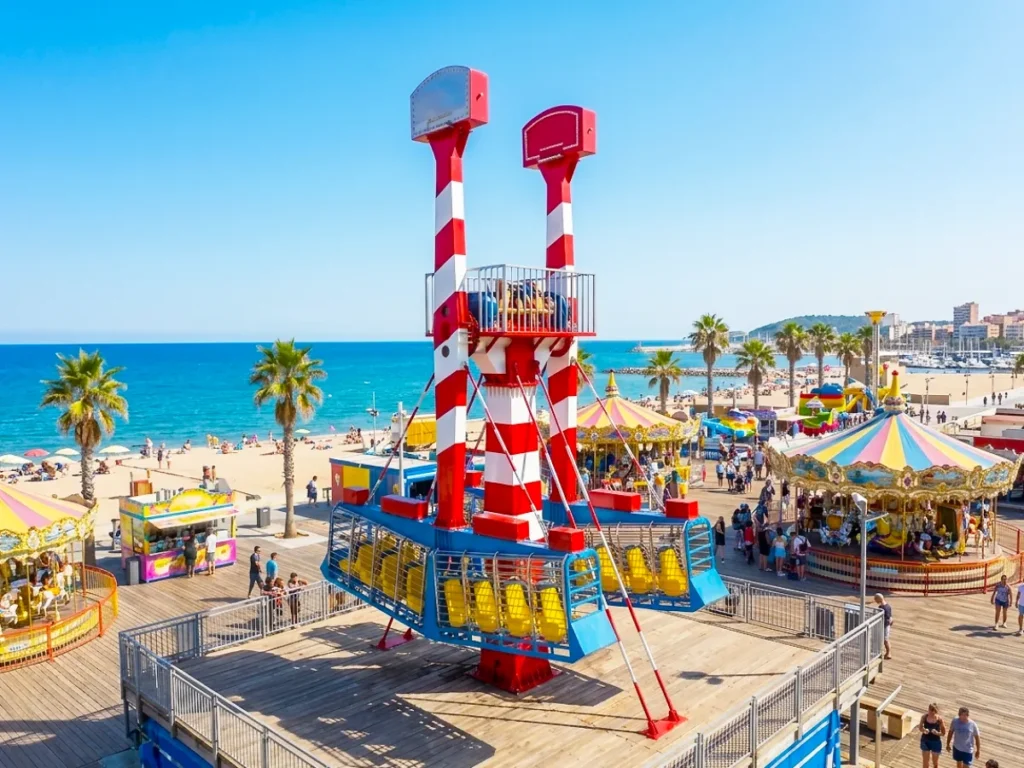
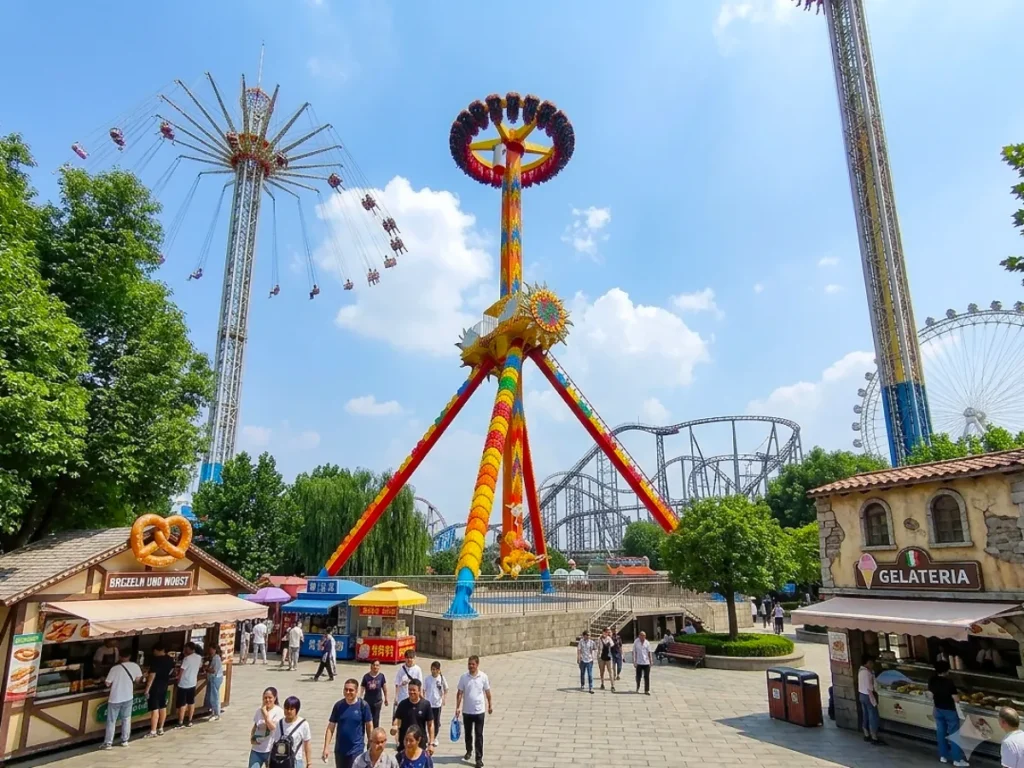
Thrill rides act as high-impact attractions that can strengthen park identity, attract attention, and influence how visitors move through the venue.
Their role is not limited to creating intense motion. A well-positioned attraction can become a visual anchor that encourages visitors to move toward a specific zone, helping distribute traffic across the park.
For regional parks, thrill rides can increase the perceived variety of the attraction portfolio. At tourist destinations, high-visibility rides may also become recognizable visual features that support marketing and social-media exposure.
The target audience matters as well. A park focused mainly on young families may need thrill attractions that complement, rather than dominate, family rides. A teen- and adult-focused park can support a stronger mix of intense attractions.
The best portfolio therefore balances thrill level with the wider visitor experience.
How Pendulum Rides Compare with Roller Coasters
Pendulum Rides and roller coasters can both serve as major attractions, but they require very different approaches to site planning and operation.
| Factor | Pendulum Rides | Roller Coaster |
|---|---|---|
| Main motion | Swinging / rotating | Track-based |
| Site planning | Defined ride footprint | Extended track layout |
| Visual impact | High | High |
| Planning focus | Clearance + ride area | Track + station + circulation |
| Typical role | High-impact attraction | Major park anchor |
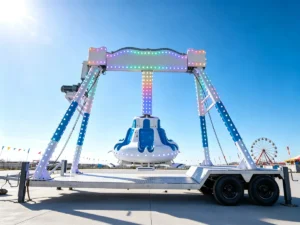
Pendulum Rides can create strong visual impact without requiring the extended track layout of a coaster. MODERN’s pendulum range includes compact models, 23-seat large pendulums, 360° versions, and portable configurations for different project scales.
A buyer evaluating a roller coaster for sale must consider more than the ride footprint. Track length, station location, queue design, emergency access, maintenance zones, and visitor circulation all influence the final layout. MODERN’s coaster range spans compact layouts through larger track systems for higher-traffic parks.
How Park Size Affects Thrill Ride Selection
Park size affects thrill ride selection because land availability determines not only what can physically fit, but also how rides interact with queues, pathways, and other attractions.
For a small park, one carefully selected high-impact ride may create more value than several large attractions competing for limited operating space.
Regional parks usually have greater flexibility. They may combine a pendulum, drop tower, or rotating thrill ride with family attractions to create a broader visitor mix.
Large theme parks can support more complex layouts because they typically have greater land, infrastructure, and maintenance resources. Roller coasters may become central attractions where track layout can be integrated into themed zones and visitor circulation.
Tourist destinations should also consider scenery and photography value. A visually prominent sky flyer, coaster, or pendulum may contribute to the destination’s identity beyond the ride experience itself.
What Technical Numbers Should Buyers Compare for Thrill Rides
Technical specifications help buyers determine whether a thrill attraction fits the site, power infrastructure, visitor demand, and operating plan.
MODERN’s published specifications show why comparing actual numbers matters.
For the 360° Giant Pendulum Ride MBP23Z:
- 23 seats
- 360° swing angle
- 19.6 m swing diameter
- 23 m device height
- 76.5 kW driving power
- 14 m × 15 m cover area
For comparison, MODERN’s Spinning Coaster has a 154 m track, 6.8 m maximum track height, 20-rider capacity, 50 kW power, and a 40 m × 16 m area. Its Small Vertical Roller Coaster requires a 43 m × 22 m floor area, has a 330 m track and 12-rider train, and reaches a listed maximum speed of 50 km/h.
These figures illustrate an important procurement difference. A pendulum concentrates movement into a defined ride envelope, while a coaster spreads its operating system across a track layout.
Buyers should therefore compare capacity, height, footprint, power, operating envelope, and site integration instead of focusing on one headline number.
What Buyers Should Check Before Ordering a Thrill Ride
Before ordering thrill rides, buyers should confirm that the attraction fits the site’s technical, operational, and regulatory conditions.
The most important checks include:
- Site area: Confirm usable land rather than total property size.
- Ride clearance: Allow for the complete moving envelope and required safety zones.
- Capacity: Match rider capacity with expected visitor demand.
- Power: Confirm available voltage, frequency, and electrical capacity.
- Foundation: Verify civil engineering and foundation requirements.
- Local regulations: Identify approval, certification, and inspection requirements before production.
- Installation: Plan access for transport, lifting, assembly, and commissioning.
- Inspection and maintenance: Ensure operators can access major mechanical and electrical components for routine servicing.
Providing this information during the inquiry stage allows the manufacturer to recommend equipment based on the actual project rather than supplying a generic quotation.
How to Match Thrill Rides with the Park’s Operating Strategy
Thrill rides should be selected according to the park’s operating strategy, because the best attraction is the one that can be operated efficiently within the park’s staffing, maintenance, and visitor-flow model.
A large ride may create strong visual impact, but it also needs enough demand, trained operators, maintenance capability, and supporting infrastructure to justify its role.
Regional parks may prioritize a 23-seat pendulum or drop tower that creates a clear visual landmark without the land requirements of a larger coaster. Destination parks may justify more complex coaster systems because the attraction can become part of the park’s core identity.
MODERN‘s thrill ride portfolio reflects these different project needs, with pendulums, drop towers, rotating rides, sky flyers, and coasters available for different footprints and visitor strategies.
Conclusion
The right thrill rides are not necessarily the tallest, fastest, or most expensive attractions. They are the rides that fit the park’s space, audience, infrastructure, visitor-flow strategy, and long-term operating plan.
Pendulum Rides can provide high visual impact within a concentrated operating area, while roller coasters can become major destination attractions when sufficient land and infrastructure are available. Real technical specifications should guide these decisions before purchase.
MODERN reports more than 2,000 global product cases and service across more than 100 countries, supported by concept design, equipment production, and project implementation capabilities. For buyers planning a new amusement park project, sharing the site plan, target audience, expected attendance, available power, and preferred attraction types is the best starting point for selecting the right thrill ride mix.